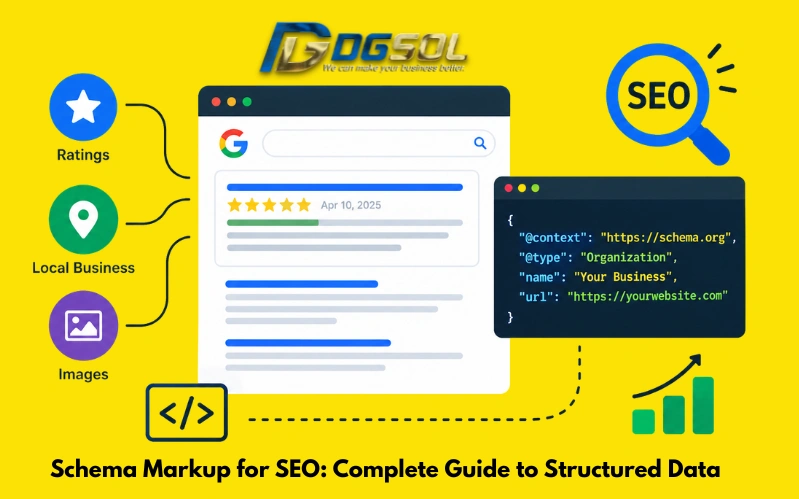
Schema markup is a form of structured data that helps search engines understand the meaning and context of information on a webpage. It can describe entities such as businesses, products, articles, events, services, and organizations in a machine-readable format. For SEO, schema markup helps search engines interpret your content more accurately and, when you meet the relevant requirements, makes eligible pages available for certain enhanced search features. This complete schema markup SEO guide explains what structured data is, how JSON-LD works, the most useful schema types, how to implement schema markup, how to test it, common errors to avoid, and how schema can fit into a search engine optimization strategy for businesses in Malaysia.
What Is Schema Markup?
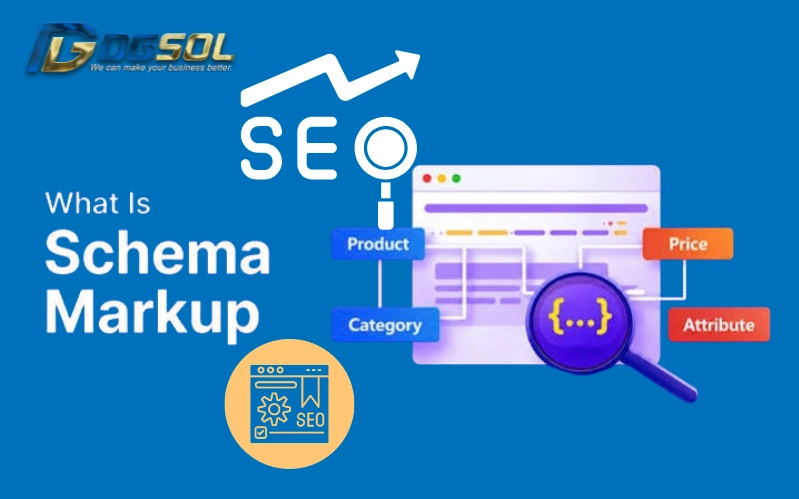
Schema markup is structured information added to a webpage to describe what its content represents. It uses a standardized vocabulary, commonly provided by Schema.org, to identify entities and properties in a machine-readable format. For example, a page about a company contains visible information such as its name, website, address, telephone number, and business description. Appropriate structured data can help describe that information in a standardized way.
Schema markup does not replace the visible content on a page. Instead, it provides additional machine-readable context.
What Is Structured Data?
Structured data is information organized in a consistent format so that computer systems can process and interpret it more easily. In SEO, structured data can help search engines understand details about a webpage and the entities mentioned on it.
For example, structured data can describe:
- An organization
- A local business
- An article
- A product
- An event
- A person
- A service
- Breadcrumb navigation
Schema Markup vs Structured Data
Understanding this difference makes it easier to create a consistent structured data SEO strategy. The terms are related but are not exactly the same.
- Schema.org provides a vocabulary for describing entities and relationships.
- Structured data is the machine-readable information created using a structured format.
- Schema markup commonly refers to structured data that uses the Schema.org vocabulary.
- JSON-LD is one format that can be used to implement structured data.
How Does Schema Markup Work?
Schema markup adds machine-readable information to a webpage so search engines can better understand what the page represents. The basic process looks like this:
Webpage content → Schema markup → Search engine interpretation → Potential eligibility for supported search features
For example, an article page might contain:
- Article headline
- Author
- Publication date
- Updated date
- Main image
- Article description
Article structured data can describe these properties in a standardized format. Search engines can then use the information alongside other signals when processing the page.
Schema Markup Types You Should Know
There are many Schema.org types, but businesses generally only need the types that accurately represent their content.
1. Organization Schema
Organization schema describes an organization or company.
It can be relevant for:
- Companies
- Agencies
- Corporations
- Non-profit organizations
- Other formal organizations
Depending on the implementation, properties can include the organization name, URL, logo, and contact information.
2. LocalBusiness Schema
LocalBusiness schema is designed for businesses that operate from a physical location or serve customers locally.
Relevant information can include:
- Business name
- Address
- Telephone number
- Website
- Opening hours
- Geographic information
- Business category
For appropriate businesses, Schema can be part of a broader local SEO optimization strategy.
3. Article Schema
Article schema helps describe article content.
It can provide information such as:
- Headline
- Author
- Image
- Publication date
- Modified date
- Publisher
This can be particularly relevant to news articles, editorial content, and informational pages.
4. BlogPosting Schema
BlogPosting is a more specific type for blog posts. It can be useful when a website publishes regular blog content and wants to describe those posts using structured data.
5. Product Schema
Product schema describes product information. Depending on the implementation and applicable requirements, information can include:
- Product name
- Description
- Image
- Brand
- SKU
- Offers
- Price
- Availability
- Ratings
eCommerce websites should ensure that structured data accurately reflects the product information visible on the page.
6. Breadcrumb Schema
Breadcrumb schema describes the hierarchy of a webpage.
For example:
Home → SEO Services → Technical SEO
Breadcrumb structured data can help search engines understand the site’s content hierarchy and may support breadcrumb-related search features.
7. FAQ Schema
FAQ structured data describes frequently asked questions and their answers. However, adding FAQ schema does not automatically mean that FAQ rich results will appear in Google. Eligibility depends on Google’s current requirements and policies.
8. Review and AggregateRating Schema
Review and rating structured data can describe legitimate reviews or ratings associated with eligible content.
It is important that:
- Ratings are genuine
- Information is accurate
- Markup matches visible content
- The implementation follows applicable search guidelines
9. Event Schema
Event schema can describe events such as:
- Conferences
- Workshops
- Seminars
- Performances
- Sporting events
Information may include the event name, date, location, and offers where applicable.
10. Service Schema
Service schema can describe services provided by a business. For example, a digital marketing agency may have individual pages describing:
- SEO services
- Technical SEO
- Local SEO
- PPC
- Social media marketing
The structured data should accurately represent the service page rather than adding unrelated information.
What Is JSON-LD Schema?
JSON-LD stands for JavaScript Object Notation for Linked Data. It is a structured format used to communicate machine-readable information about webpage content.
For many websites, JSON-LD schema is a practical way to implement structured data because it separates structured information from most of the visible HTML content.
What Is JSON-LD Used For?
It can be used to describe entities such as:
- Organizations
- Local businesses
- Articles
- Products
- Events
- Services
- Breadcrumbs
A basic JSON-LD structure looks like this:
<script type=”application/ld+json”>
{
“@context”: “https://schema.org”,
“@type”: “Organization”,
“name”: “Example Company”,
“url”: “https://example.com”
}
</script>
The example above identifies an organization and provides its name and website. A real implementation should use accurate information that corresponds to the actual website.
Schema Markup Examples
Practical examples make schema easier to understand.
Organization Schema Example
This example describes a company using Organization structured data.
<script type=”application/ld+json”>
{
“@context”: “https://schema.org”,
“@type”: “Organization”,
“name”: “Example Company”,
“url”: “https://example.com”,
“logo”: “https://example.com/logo.png”
}
</script>
Article Schema Example
The information should match the actual article.
<script type=”application/ld+json”>
{
“@context”: “https://schema.org”,
“@type”: “Article”,
“headline”: “Schema Markup for SEO”,
“author”: {
“@type”: “Person”,
“name”: “Author Name”
},
“datePublished”: “2026-01-01”,
“dateModified”: “2026-01-01”
}
</script>
LocalBusiness Schema Example
For a business, the structured information should accurately reflect its real business details.
<script type=”application/ld+json”>
{
“@context”: “https://schema.org”,
“@type”: “LocalBusiness”,
“name”: “Example Business”,
“telephone”: “+60-3-0000-0000”,
“url”: “https://example.com”
}
</script>
How to Add Schema Markup to a Website
Implementing schema markup requires more than copying a code snippet. Here is the procedure:
Step 1 — Identify the Page and Its Content
Start by understanding what the page actually represents.
For example:
- Company page → Organization
- Local business page → LocalBusiness
- Blog article → Article or BlogPosting
- Product page → Product
- Event page → Event
Step 2 — Choose the Appropriate Schema Type
Select a schema type that accurately represents the content. Avoid choosing a schema type simply because it appears to offer a potentially attractive search feature.
Step 3 — Create the Structured Data
Create the relevant JSON-LD markup using accurate information. Every important property should correspond to information available on the page or otherwise legitimately associated with the entity.
Step 4 — Add JSON-LD to the Website
JSON-LD can generally be implemented through:
- A CMS or SEO plugin
- Website templates
- Custom code
- Developer implementation
- Structured data management systems
The exact method depends on the website platform.
Step 5 — Validate the Markup
Test the structured data before considering the implementation complete.
Check for:
- Syntax problems
- Missing properties
- Invalid values
- Incorrect URLs
- Incorrect schema types
- Content mismatches
Step 6 — Monitor the Implementation
After publishing, periodically review the website’s structured data. Schema should be updated whenever the underlying information changes.
How to Test and Validate Schema Markup
Validation is an essential part of schema implementation. Here are the following ways to test your schema:
Google Rich Results Test
The Google Rich Results Test can help website owners test whether a page’s structured data is eligible for supported rich-result features. It can identify issues that may prevent eligibility for certain supported features.
Schema Markup Validator
The Schema Markup Validator focuses on validating Schema.org structured data. It is useful for checking whether markup is structured correctly according to the Schema.org vocabulary. These tools serve different purposes, so use the right validator for the task.
What to Check During Validation
A technically valid implementation is still not useful if the information is inaccurate or misleading. When testing schema markup, review:
- Required properties
- Recommended properties
- JSON-LD syntax
- Schema type
- Property values
- URLs
- Entity relationships
- Visible-page consistency
- Duplicate markup
Common Schema Markup Errors and How to Fix Them
Even valid-looking schema can contain problems. Here is a common structured data error that you need to fix:
- Using the Wrong Schema Type
Choose a type that accurately represents the page. For example, don’t use Product schema on a general service page simply because you want product-related search features.
- Markup Does Not Match Visible Content
The structured data should accurately reflect the content users can find on the page. If structured data says one thing while the webpage displays another, the implementation can become misleading.
- Missing Required Properties
Some search features require specific properties. Review the applicable documentation and testing results to identify missing information.
- Invalid JSON-LD Syntax
A misplaced comma, quotation mark, or bracket can invalidate JSON-LD. Always validate the final code before publishing.
- Fake or Unsupported Reviews
Never create artificial reviews or ratings simply to obtain enhanced search features. Review structured data should represent legitimate information.
- Using Schema to Manipulate Search Results
Schema should describe real content. Adding irrelevant or misleading structured data is not a legitimate SEO strategy.
- Duplicate Schema Markup
Multiple plugins or custom implementations can sometimes generate overlapping structured data. Review the source code to identify duplicated or conflicting markup.
- Adding Schema to the Wrong Page
Not every schema type belongs on every page. Choose structured data based on the actual purpose and content of the page.
Schema Markup, Rich Results and Rich Snippets
The terms schema markup, rich results, and rich snippets are often confused.
What Are Rich Results?
Rich results are enhanced search-result presentations that can display additional information or functionality compared with a standard result. Their appearance depends on Google’s supported search features and eligibility requirements.
What Are Rich Snippets?
Rich snippets are a commonly used SEO term for enhanced search-result information. However, Google’s documentation more broadly uses rich results when discussing supported enhanced search features.
How Schema Relates to Rich Results
Certain structured data implementations can make pages eligible for specific rich-result features.
The relationship can be summarized as:
Relevant content + Correct structured data + Technical/content requirements → Potential eligibility
It is not:
Schema → Guaranteed rich result
Schema Markup and AI Search in 2026
Search is increasingly incorporating AI-powered features, making machine-readable information an important part of modern technical SEO discussions.
Schema Markup for AI Search
Structured data provides machine-readable information for AEO, GEO, or SEO strategies. It makes it easier for systems to interpret entities and relationships on a website. However, schema should not be presented as a guaranteed way to appear in AI-generated answers.
Schema Markup for AEO
Answer Engine Optimization (AEO) focuses on making information useful and understandable for systems that provide direct answers.
It can be one part of an AEO strategy, alongside:
- Clear content
- Direct answers
- Strong information architecture
- Authoritative sources
- Well-defined entities
- Helpful FAQs
- Good technical SEO
Schema Markup for GEO
Generative Engine Optimization (GEO) focuses on improving how content can be understood and surfaced by generative search systems. Schema can support the broader technical foundation by clearly describing entities and information, but it should not be treated as a standalone GEO tactic.
Does Schema Markup Help ChatGPT or Other AI Search Engines?
Schema markup can make website information more structured and machine-readable, but it does not guarantee that ChatGPT or another AI system will:
- Cite a website
- Mention a company
- Recommend a business
- Use a particular page
- Display its content in an answer
For AI search, schema should therefore be combined with high-quality content, clear entity information, strong site architecture, and overall SEO.
Final Takeaway
Schema markup provides a structured way to describe webpage content and entities. When implemented correctly, it helps search engines interpret information and can make eligible pages available for certain enhanced search features.
JSON-LD schema is a practical implementation format, while Schema.org provides the vocabulary used to describe entities and properties.
For businesses in Malaysia, appropriate schema markup strategies can support local and technical SEO and communicate business information more clearly.
Whether you’re optimizing a local business website, eCommerce store, blog, or service website, properly implemented structured data can strengthen the technical foundation of your SEO strategy.
Frequently Asked Questions
Does schema markup improve SEO?
Schema markup can support SEO by providing clearer information about page content and potentially enabling eligibility for supported rich-result features. However, it does not guarantee higher rankings.
Does schema markup improve Google rankings?
Schema markup is not a guaranteed direct ranking factor that automatically increases a webpage’s position. Its main role is to provide structured information and support eligibility for applicable search features.
What is the Google Rich Results Test?
The Google Rich Results Test is a tool used to test webpages and determine whether their structured data may be eligible for supported rich-result features.
Does schema markup guarantee rich snippets?
No. Valid schema does not guarantee that Google will display a rich result. Eligibility depends on the relevant requirements, and Google determines how search results are presented.
What schema markup should a local business use?
A relevant LocalBusiness subtype may be appropriate for a qualifying local business, while Organization can be more suitable for organization-level information. The correct choice depends on the business and page content.
Can schema markup help with AI search?
Structured data can provide machine-readable information that helps describe entities and content, but it does not guarantee visibility, citations or mentions in AI search systems. It should be combined with quality content and broader SEO practices.