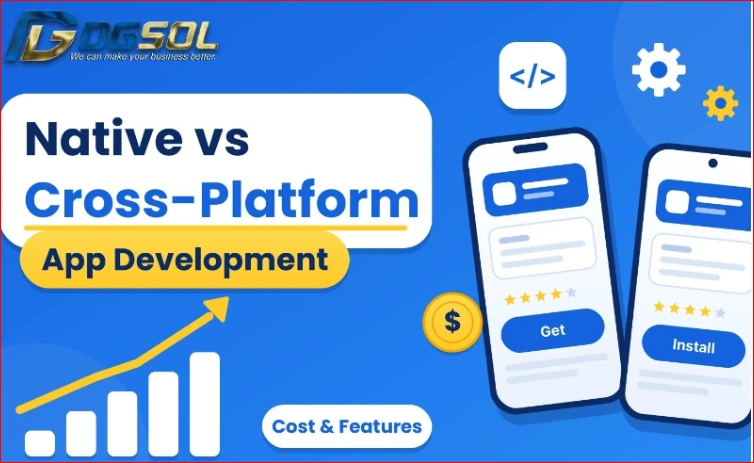
Native vs cross-platform app development comes down to one trade-off in Malaysia. Native apps are built separately for iOS and Android for maximum performance, while cross-platform apps share one codebase to cut costs and launch faster. For most startups and SMEs with a standard business app, cross-platform is the smarter starting point. Native makes sense when speed, advanced hardware access, or a premium user experience is central to the product.
Why This Decision Gets Expensive When You Get It Wrong
Most founders approach this choice with a budget and a deadline, not a technical preference. Then two agencies quote wildly different numbers, and nobody explains why. Choose wrong, and you pay twice. You either overspend on two codebases you didn’t need, or you rebuild a cross-platform app a year later when it hits limits your product can’t live with. The goal is to match the approach to your product, not to chase whatever is trending.
What Is Native App Development?
Native app development means building a separate app for each operating system using its own tools. iOS apps are written in Swift using Xcode, and Android apps are written in Kotlin using Android Studio—key technical choices when mapping out the best mobile app features for business growth.
Because the code talks directly to the operating system, native apps get first access to new device features and feel instantly familiar to users. The catch is that you are building and maintaining two products, with two sets of code, tests, and updates.
What Is Cross-Platform App Development?
Cross-platform development uses a single codebase to produce apps for both iOS and Android. Two frameworks dominate the market:
- Flutter (Google): Uses the Dart language and draws its own interface, which keeps visuals consistent across devices.
- React Native (Meta): Uses JavaScript and renders with native components, which suits teams that already have web developers.
When Malaysian businesses compare Flutter vs React Native, the practical difference is smaller than the internet suggests. Both frameworks, whether you focus on frontend vs backend development, can deliver a polished app, and the better pick usually depends on your developers’ skills and the features you need.
Native vs Cross-Platform App Development: Side-by-Side Comparison
| Factor | Native | Cross-Platform |
| Codebase | Two (iOS and Android) | One shared codebase |
| Development time | Longer, with two parallel builds | Typically 30–40% faster |
| Upfront cost | Higher | Lower |
| Performance | Best possible | Very good for most business apps |
| Device feature access | Full and immediate | Most features; some need custom native code |
| UI/UX | Fully platform-specific | Near-native, may need design tweaks |
| Maintenance | Two sets of updates | One set of updates |
| Best for | Games, AR, heavy processing | MVPs, booking, e-commerce, service apps |
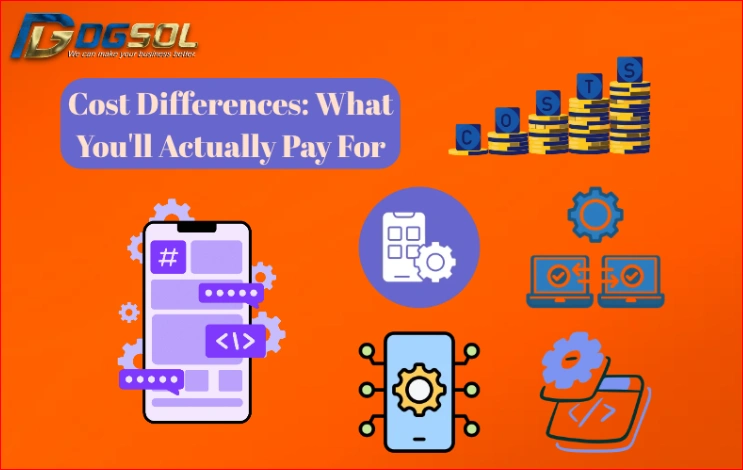
Cost Differences: What You’ll Actually Pay For
Exact quotes depend on scope, but the pattern is consistent. Here is the logic behind the numbers so you can double-check any proposal.
Native App Development Cost
You are paying for two development tracks, two rounds of testing, and two release pipelines. A mid-complexity app built natively for both platforms often costs 40–60% more than a comparable cross-platform build. If you launch on one platform first, that gap narrows, but you will still need to build the second app later.
Cross-Platform App Development Cost
One codebase means shared logic, shared testing, and one set of bug fixes. Savings on the initial build typically land between 30% and 40%. Budget a little extra if your app needs custom native modules for features the framework doesn’t handle well.
Costs Most Teams Forget
- App store developer accounts, annual fees, and review compliance
- Third-party services such as payments, maps, analytics, and push notifications
- Updates for each new iOS and Android release
- Ongoing bug fixing and performance monitoring
Yearly maintenance commonly runs around 15–20% of the original build cost. Native sits toward the higher end because every fix is applied twice. For a fuller budget breakdown, it is essential to learn about the possible app development cost.
Feature Differences That Actually Matter
Not every feature behaves the same way under both approaches. Here is where the gap shows up:
- Performance-heavy features: 3D graphics, real-time video processing, and augmented reality run best natively.
- Everyday hardware access: Camera, GPS, biometric login, and push notifications work well in cross-platform apps.
- Newer or niche APIs: Brand-new OS features and specialized sensors reach native tools first. Frameworks usually catch up, but you may wait weeks or months.
- Background processing: Complex offline syncing and background tasks are simpler to control natively.
- UI polish: Native follows each platform’s design rules automatically. Cross-platform can match them, but it takes deliberate design effort.
A quick example makes this concrete. A restaurant group in Malaysia building an ordering app with menus, loyalty points, payments, and order notifications will be well served by cross-platform. A furniture retailer building an AR tool that places 3D sofas in a customer’s living room should seriously consider native.
How to Choose: A 5-Step Checklist
1. Define your core feature.
Write down the one action users must be able to do; if it relies on heavy graphics or advanced sensors, lean native. If it is forms, listings, bookings, or payments, cross-platform is usually enough.
2. Set a realistic budget and timeline.
A tight budget or a launch window of three to four months points toward cross-platform. A longer runway and a larger budget make native easier to justify.
3. Check where your customers are.
Look at your own website analytics, and compare it with global mobile OS market share data from StatCounter. If most of your audience uses iPhones, building native iOS first may be the leaner move.
4. Start with a minimum viable product.
Launch the essential features, collect real user feedback, then expand. The breakdown of MVP development covers how to scope this properly.
5. Plan for year two.
Ask your developer how the app will scale, who handles OS updates, and what it costs to add features later. A cheap build with an expensive future is not a saving.
Mistakes to Avoid When Comparing Native and Cross-Platform
- Choosing native “because it’s better.” It is better only if your product needs what it offers.
- Assuming cross-platform means zero platform-specific work. Expect some tailoring for each store and operating system.
- Skipping the prototype. A clickable prototype exposes usability problems before you pay for development.
- Comparing quotes on price alone. Ask what each quote includes: testing, design, deployment, and post-launch support.
- Ignoring your team’s skills. If you plan to maintain the app in-house, choose a framework your people can realistically support.
Match the Approach to Your Product, Not the Trend
Native vs cross-platform app development in Malaysia is not a question of which is superior. It is a question of fit. Cross-platform wins on cost, speed, and simpler maintenance for most business apps, while native earns its higher price when performance or cutting-edge device features define the product.
Start with your core feature, your budget, and your timeline, and let those answers drive the technology choice. If you’re still unsure, a short scoping exercise before development begins is far cheaper than a rebuild later.
If you’re weighing native vs cross-platform app development for your next project, contact DGSOL, and we’ll help you map out the right approach for your business.
Frequently Asked Questions
What is the main difference between native and cross-platform app development?
Native apps in Malaysia are built separately for iOS and Android, while cross-platform apps use one shared codebase for both. Native offers peak performance, and cross-platform offers lower cost and faster delivery.
Is cross-platform app development cheaper than native?
Yes, usually by 30-40% on the initial build, because you develop, test, and fix one codebase instead of two. Custom native modules can add some cost back.
How much does native app development cost compared to cross-platform?
A mid-complexity native app for both platforms often costs 40-60% more than a comparable cross-platform build. The final figure depends on features, design, and integrations.
Is Flutter or React Native better for business apps?
Neither wins outright. Choose Flutter for consistent custom visuals, or React Native if your Malaysian team already knows JavaScript.
Do cross-platform apps perform as well as native apps?
For most business apps, such as bookings, e-commerce, and service portals, users won’t notice a difference. Graphics-heavy apps, games, and AR tools still perform best natively.
When should a business choose native app development?
Choose native when your product depends on advanced hardware, heavy processing, AR, or immediate access to new OS features. It also suits apps where a premium, platform-specific feel is central.
How long does it take to build a cross-platform app?
A simple MVP often takes three to four months, while complex apps take longer. Shared code typically makes cross-platform delivery faster than two native builds.
Can I switch from cross-platform to native later?
Yes, but it usually means rebuilding the app, not converting it. Starting with a well-scoped MVP and a clear year-two plan reduces the risk of a costly switch.