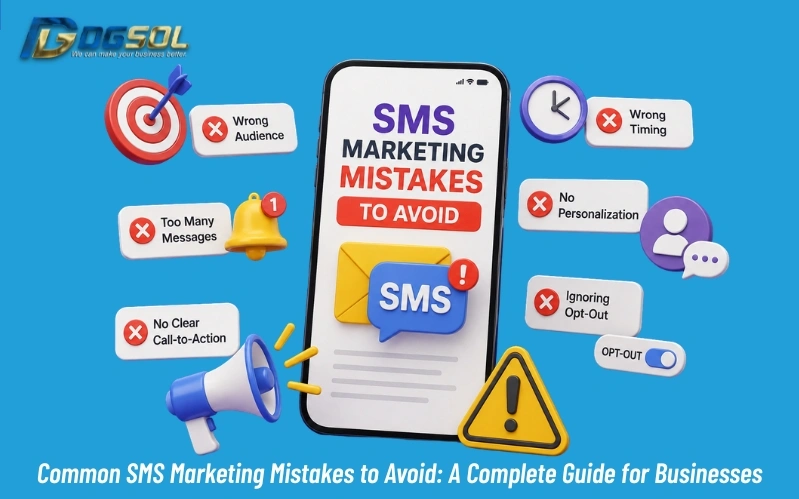
SMS marketing can be a powerful way for businesses to communicate with customers, promote offers, generate leads, and increase sales. However, poorly planned campaigns can have the opposite effect. Sending too many messages, ignoring customer consent, using unclear content, or targeting the wrong audience can reduce engagement and increase unsubscribes. Understanding the most common SMS marketing mistakes helps businesses create more effective campaigns while protecting customer trust. By following best practices, businesses can improve customer engagement, campaign performance, and conversion rates. In this guide, we’ll cover the most common texting marketing mistakes to avoid, explain why they happen, and provide practical tips for improving your SMS marketing strategy for business.
What Are SMS Marketing Mistakes?
SMS marketing mistakes are errors businesses make when planning, creating, sending, or measuring campaigns. These mistakes can affect customer experience, message deliverability, engagement, and overall campaign performance.
Common examples include:
- Sending messages without proper consent
- Writing long or confusing content
- Sending the same message to every customer
- Sending messages too frequently
- Choosing poor sending times
- Using weak calls to action
- Ignoring SMS deliverability
- Failing to track campaign performance
- Making every message promotional
- Providing a poor landing page experience
Common SMS Marketing Mistakes to Avoid
Avoiding these SMS campaign mistakes allows businesses to build stronger customer relationships and get better results from text message marketing.
1. Sending SMS Messages Without Proper Consent
One of the biggest SMS marketing mistakes is sending promotional messages to people who haven’t agreed to receive them. Because it is a direct communication channel, businesses should use permission-based marketing and make the subscription process clear. A proper SMS opt-in process should explain what customers are signing up for and how they can stop receiving messages.
Businesses should:
- Obtain customer consent before promotional messaging
- Clearly explain the purpose of the subscription
- Keep records of subscriber consent
- Provide an easy unsubscribe option
- Respect opt-out requests
- Avoid purchasing random contact databases
Note:
Build your subscriber list through legitimate opt-in methods such as website forms, QR codes, checkout pages, loyalty programs, or in-store subscriptions.
2. Writing Long or Unclear SMS Messages
SMS messages have limited space and are designed for quick communication. One common text message marketing mistake is trying to include too much information in a single message. Customers should understand the main point quickly.
A good marketing message should:
- Be concise
- Explain the main benefit
- Use simple language
- Focus on one primary offer
- Include a clear CTA
- Remove unnecessary information
Example of a Weak Message
“Hello, we are pleased to inform you that our company is currently offering a variety of discounts across multiple product categories, including several different products and services that you may be interested in…”
This is unnecessarily long.
Better Example
“Get 20% OFF your next order. Offer ends tonight. Shop now: [link].”
The second version communicates the offer, urgency, and action clearly.
Effective copywriting should make the message easy to scan and understand.
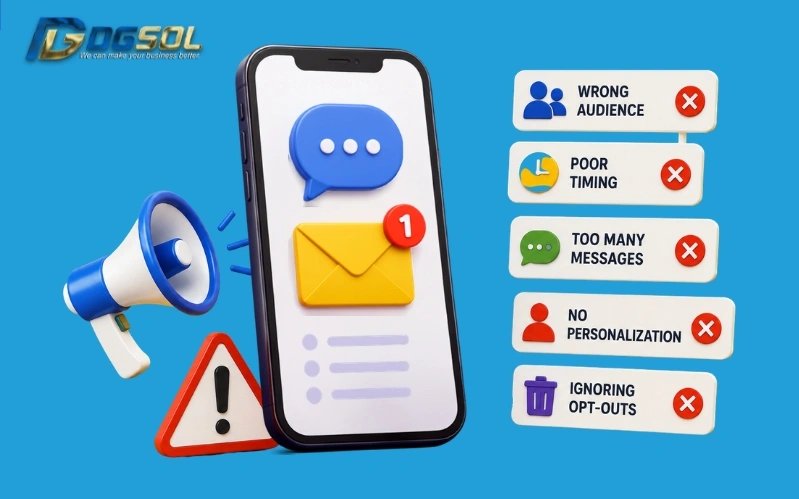
3. Sending the Same Message to Everyone
Another common SMS marketing error is treating every subscriber as if they have identical interests.
Customers may have different:
- Interests
- Locations
- Purchase histories
- Budgets
- Buying habits
- Product preferences
- Engagement levels
Use SMS Customer Segmentation
Businesses can create different audience segments based on customer data.
For example:
- New customers
Send welcome offers and introductory promotions.
- Repeat customers
Promote loyalty rewards and exclusive discounts.
- Inactive customers
Send re-engagement offers.
- Location-based customers
Promote local events or nearby store offers.
- Product-interest groups
Send promotions related to products customers have previously viewed or purchased.
4. Sending Too Many Messages or Sending Them at the Wrong Time
Sending too many messages is one of the biggest SMS marketing problems businesses face. Customers may initially subscribe for useful updates or occasional promotions which make it less effective strategy than whatsapp broadcast messaging campaign.However, daily promotional messages can quickly become frustrating.
Excessive messaging can result in:
- Higher unsubscribe rates
- Lower engagement
- More complaints
- Reduced customer trust
- Blocked numbers
- Poor campaign performance
Pay Attention to Marketing Timing
The right sending time depends on your audience and industry. Businesses should consider:
- Customer schedules
- Local time zones
- Business hours
- Message purpose
- Customer behavior
- Previous campaign performance
For example, a restaurant may send lunch promotions before customers typically decide on lunch, while an appointment-based business may send reminders before scheduled appointments.
5. Using Weak or Confusing Calls to Action
A message can have an excellent offer but still perform poorly if customers don’t know what to do next. A strong SMS marketing CTA tells customers exactly what action they should take.
Examples include:
- Shop Now
- Book Today
- Claim Your Offer
- Register Now
- Learn More
- Get Started
- Download Now
- Contact Us
- Reserve Your Seat
Example
Instead of:
“Enjoy our special promotion this weekend.”
Use:
“Enjoy 20% OFF this weekend. Claim your offer: [link]”
A strong call to action can help improve click-through rates and support better SMS conversion optimization.
6. Not Tracking SMS Campaign Performance
One of the most overlooked SMS campaign mistakes is failing to measure results. Sending thousands of messages does not automatically mean a campaign was successful. Businesses need to understand what customers actually did after receiving a message.
Important Marketing Metrics
Businesses can monitor:
- Delivery rate
- Click-through rate (CTR)
- Response rate
- Conversion rate
- Unsubscribe rate
- Revenue generated
- Cost per conversion
- Return on investment (ROI)
For example, if a campaign has a high delivery rate but very few clicks, the problem may be the message, offer, CTA, or landing page.
Note:
Regular SMS marketing analytics help businesses identify weaknesses and improve future campaigns.
7. Ignoring SMS Deliverability
Even a well-written campaign will not produce results if messages fail to reach customers. Several factors can affect SMS deliverability, including poor contact data and inappropriate messaging practices.
Common causes of delivery problems include:
- Invalid phone numbers
- Outdated customer databases
- Poor-quality contact lists
- Spam-like content
- Excessive sending
- Incorrect message formatting
- Poor sender identification
How to Improve SMS Deliverability
A clean subscriber database is a foundation of effective SMS communication. It should:
- Keep customer databases updated
- Remove invalid numbers
- Use permission-based subscriber lists
- Monitor delivery rates
- Avoid spam-like messaging
- Maintain consistent sending practices
- Follow applicable messaging requirements
8. Making Every SMS Message About Selling
Another common SMS advertising mistake is turning every message into a sales promotion. Customers don’t want to receive constant discount messages. Businesses should balance promotional and useful communication.
Depending on the business, it can also be used for:
- Appointment reminders
- Order updates
- Delivery notifications
- Payment confirmations
- Loyalty information
- Customer service updates
- Important announcements
- Helpful tips
For example, an e-commerce company could combine promotional messages with order and delivery updates.
9. Failing to Personalize SMS Campaigns
Generic messaging is another common mistake in marketing. Customers are more likely to engage with messages that are relevant to their interests and previous interactions with a business. Businesses can use personalized SMS marketing to tailor communication using information such as:
- Customer name
- Previous purchases
- Product interests
- Location
- Loyalty status
- Customer lifecycle stage
Example:
Generic:
“Get 15% OFF our products today.”
Personalized:
“Hi Sarah, enjoy 15% OFF your favorite products today. Shop now: [link]”
10. Not Providing an Easy Unsubscribe Option
Businesses should make it simple for customers to stop receiving promotional SMS.If customers cannot easily unsubscribe, they may become frustrated and report or block the sender.
A good SMS opt-out process should be:
- Easy to understand
- Easy to use
- Clearly communicated
- Properly managed by the business
Businesses should also respect unsubscribe requests promptly rather than continuing to send promotional messages. Providing a straightforward opt-out process helps maintain customer trust and supports responsible SMS marketing.
11. Sending Messages Without Testing Them
A simple mistake in an SMS campaign can affect hundreds or thousands of customers.For example, a business might accidentally send:
- The wrong discount code
- A broken link
- Incorrect pricing
- An outdated offer
- A message with personalization errors
- An incorrect date or time
Before Launching an SMS Campaign, Check:
- Spelling and grammar
- Links
- Discount codes
- Pricing
- Dates
- CTA
- Personalization fields
- Sender information
- Landing page
- Opt-out instructions
Sending a test message before launching the full campaign can help you catch errors before customers do.
12. Ignoring the Landing Page Experience
The SMS itself is only one part of the customer journey. If a customer clicks a promotional link but lands on a slow, confusing, or irrelevant page, the campaign may lose the conversion.
A good campaign landing page should:
- Load quickly on mobile devices
- Match the offer
- Have a clear CTA
- Provide relevant information
- Make purchasing or contacting the business simple
For example, if the SMS promotes a 20% discount on shoes, the link should ideally take customers to the relevant product or promotion rather than a generic homepage.
SMS Marketing Best Practices to Avoid These Mistakes
Following consistent SMS marketing best practices can help businesses create stronger campaigns.Use this checklist:
- Obtain customer consent
- Build a quality subscriber list
- Segment your audience
- Personalize relevant messages
- Keep content concise
- Use clear CTAs
- Send messages at appropriate times
- Avoid excessive frequency
- Test campaigns before launch
- Monitor SMS deliverability
- Provide an easy opt-out
- Track campaign performance
- Optimize campaigns using data
The goal is not simply to send more SMS messages. The goal is to send more relevant messages to the right customers at the right time.
SMS Marketing Mistakes That Can Hurt Conversions
Some mistakes have a particularly strong impact on conversions.
- Poor Targeting
If the message is irrelevant to the recipient, they are less likely to respond.
- Generic Messaging
Messages that don’t reflect customer interests tend to get lower engagement.
- Weak CTA
Customers may be interested but fail to take action if the next step isn’t clear.
- Poor Timing
A relevant message can still perform poorly if it arrives at an inappropriate time.
- Excessive Messaging
Too many promotional messages can cause customers to unsubscribe.
- Poor Landing Pages
A confusing or slow mobile page can turn interested customers away.
- No Personalization
Relevant personalization can make messages more useful and engaging.
- No Performance Tracking
Without data, businesses cannot determine which campaigns are successful.
How to Improve Your SMS Marketing Strategy
If your campaigns are not producing the expected results, use a structured improvement process.
Step 1: Review Your Subscriber List
Remove invalid, outdated, and inappropriate contacts while maintaining proper consent records.
Step 2: Check Customer Consent
Make sure promotional SMS recipients have properly opted in and understand what they are subscribing to.
Step 3: Segment Your Audience
Create customer groups based on relevant information such as purchase history, interests, location, and engagement.
Step 4: Improve Your SMS Copy
Keep messages concise and focus on one clear benefit and action.
Step 5: Improve Timing
Analyze past campaigns to identify when your customers respond best.
Step 6: Test Campaign Elements
Test different messages, offers, CTAs, sending times, and audience segments
Step 7: Track Results
Monitor delivery, clicks, responses, conversions, opt-outs, and ROI.
Step 8: Optimize Future Campaigns
Use campaign data to identify what worked and apply those insights to future campaigns.
Final Thoughts
Avoiding common SMS marketing mistakes is just as important as creating attractive promotional campaigns. Problems such as poor consent management, generic messages, excessive frequency, weak CTAs, poor deliverability, and a lack of performance tracking can reduce the effectiveness of an campaign. A successful SMS marketing strategy focuses on relevance, timing, personalization, customer consent, and measurable results.
By following the right SMS marketing best practices, businesses can create more useful customer communication, improve engagement, generate leads, increase conversions, and build stronger long-term relationships.
The key is simple:
Get permission → Segment customers → Personalize messages → Send at the right time → Use a clear CTA → Track results → Optimize.
Frequently Asked Questions
How often should businesses send marketing SMS?
There is no universal frequency that works for every business. Businesses should avoid excessive messaging and send relevant information or promotions at appropriate intervals based on customer expectations and campaign performance.
What is the best time to send SMS marketing messages?
The best time depends on the audience, industry, customer behavior, and message type. Businesses should generally avoid very early or very late messages and test different send times to see what works best for their customers.
How can I improve SMS marketing conversions?
Businesses can improve SMS conversions by targeting relevant customer segments, personalizing messages, using compelling offers, creating clear CTAs, sending messages at suitable times, optimizing landing pages, and tracking campaign performance.
How can businesses improve SMS deliverability?
Businesses can improve SMS deliverability by maintaining accurate contact lists, removing invalid numbers, using permission-based databases, avoiding spam-like content, monitoring delivery rates, and following appropriate messaging practices.
Should every SMS marketing message include a CTA?
For promotional campaigns, a clear CTA is generally useful because it tells customers what to do next. Examples include Shop Now, Book Today, Claim Offer, Learn More, and Register Now.
How can personalization improve SMS marketing?
Personalization can make messages more relevant by using appropriate customer information such as names, interests, purchase history, or loyalty status. Relevant personalization can improve engagement and encourage customers to take action.