WhatsApp has become an important channel for businesses that want to communicate directly with customers. However, sending the same message to every contact does not always produce the best results. Customers are more likely to respond when a message aligns with their interests, past interactions, and needs. This is where WhatsApp broadcast personalization becomes valuable. By using customer segmentation, relevant information, personalized offers, and targeted messaging, businesses can improve customer engagement and conversion opportunities. Personalized messaging can help businesses create more relevant campaigns for customers across different cities, industries, and segments. In this guide, we’ll explain how to personalize WhatsApp broadcast messages, including practical personalization techniques, examples, segmentation strategies, marketing automation options, and best practices.
What Are WhatsApp Broadcast Messages?
WhatsApp broadcast messages allow businesses to send the same campaign to multiple customers without creating a group conversation. Recipients receive the message privately, which makes WhatsApp broadcast marketing useful for customer communication, promotions, announcements, and updates.
Businesses can use it for:
- Product promotions
- Special offers
- New product announcements
- Event invitations
- Appointment reminders
- Customer updates
- Loyalty rewards
- Seasonal campaigns
- Product recommendations
Why Personalize WhatsApp Broadcast Messages?
Personalization makes business communication more relevant to individual customers. Instead of sending identical promotional messages to everyone, businesses can tailor content to customer interests, behavior, location, and purchase history.
1. Improve Customer Engagement
Customers are more likely to interact with messages that are relevant to them. Personalized WhatsApp messages can encourage customers to reply, click a link, ask questions, or make a purchase.
2. Increase Marketing Conversions
A relevant offer can be more effective than a generic promotion. Businesses can use customer information to present products or services that match specific interests and buying behavior.
3. Improve Customer Retention
Personalized communication can help businesses maintain relationships with existing customers through loyalty offers, recommendations, reminders, and useful updates.
4. Generate Better Leads
Targeted WhatsApp campaigns can help businesses reach customers based on their interests or previous interactions, supporting WhatsApp lead generation and lead nurturing.
5. Create Better Customer Experiences
Personalized communication makes customers feel a business understands their needs, rather than treating every contact as the same audience.
How to Personalize WhatsApp Broadcast Messages
Businesses can personalize WhatsApp broadcasts in several ways without overcomplicating campaigns.
1. Use the Customer’s Name
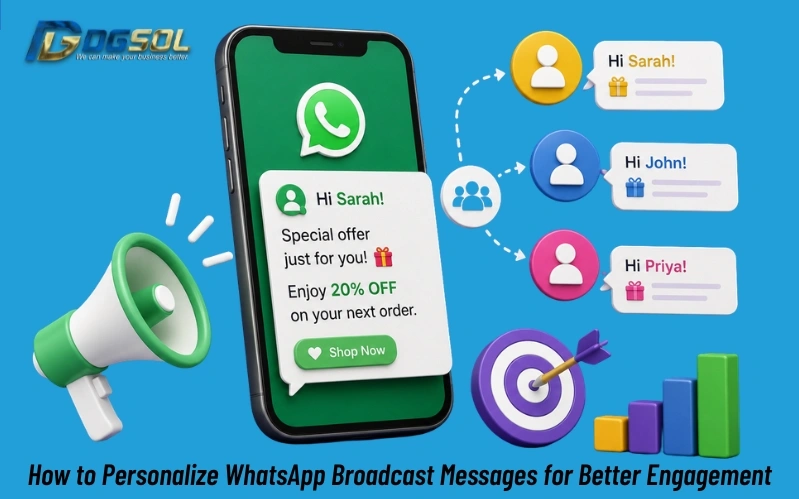
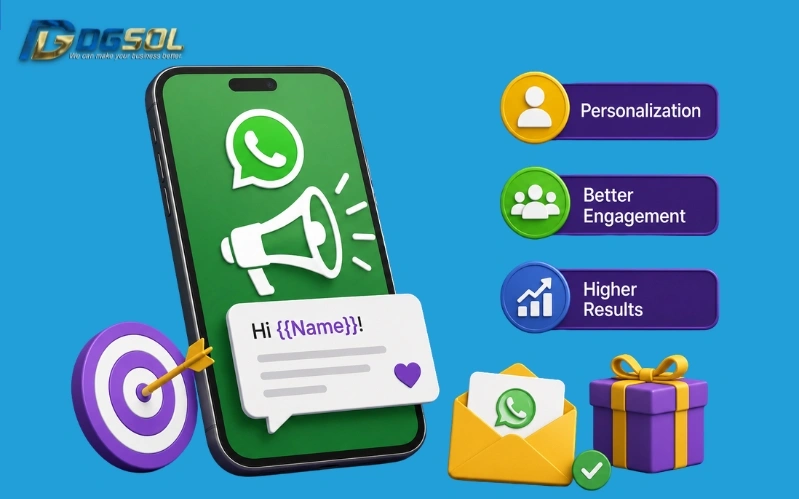
One of the simplest forms of WhatsApp message personalization is addressing customers by name. For example:
Generic message:
Enjoy 20% off our latest products today.
Personalized message:
Hi Sarah! Enjoy 20% off our latest collection today.
Using a customer’s name can make a business message feel more direct and personal. However, businesses should ensure that customer information is accurate before sending campaigns.
2. Segment Your Contacts
WhatsApp customer segmentation is one of the most important parts of personalized marketing. Instead of treating every contact as one audience, businesses can create customer segments based on factors such as:
- New customers
- Existing customers
- Repeat customers
- Inactive customers
- VIP customers
- Location
- Product interests
- Purchase history
- Engagement level
For example, an online clothing store could create separate segments for customers interested in men’s clothing, women’s clothing, footwear, and accessories.
3. Personalize Messages Based on Purchase History
Previous purchases can provide useful information for creating more relevant campaigns. Rather than sending unrelated promotions, the business can use purchase history to create personalized WhatsApp marketing campaigns. For example, if a customer previously purchased running shoes, a business could promote:
- Running socks
- Sports clothing
- Running accessories
- New running shoes
4. Send Location-Based Messages
Location is another useful factor for WhatsApp audience segmentation. Businesses with multiple branches or service areas can create location-specific campaigns.
For example:
Hi Adam! Visit our Kuala Lumpur store this weekend and enjoy 15% off selected products.
Location-based WhatsApp marketing benefits for businesses operating in:
- Kuala Lumpur
- Selangor
- Penang
- Johor
- Other Malaysian cities and regions
5. Personalize Offers and Promotions
Not every customer needs to receive the same discount or promotion. Relevant offers can make WhatsApp promotional messages more useful and encourage customers to take action. Businesses can create offers based on customer behavior and relationship with the brand.
Examples include:
- First-purchase discounts
- VIP offers
- Birthday promotions
- Loyalty rewards
- Repeat-customer discounts
- Seasonal promotions
- Product-specific offers
For example:
Hi Sarah! As one of our returning customers, enjoy 15% off your next order this weekend.
6. Personalize Messages According to Customer Interests
Businesses can use customer interests to create more relevant campaigns. Personalized WhatsApp content can improve relevance and reduce unnecessary promotional messages.
For example:
- Fitness customers:
Promote workout equipment or sports products.
- Restaurant customers:
Promote meals or offers based on previous orders.
- E-commerce customers:
Recommend products from categories they previously viewed or purchased.
- Service customers:
Promote related services based on their previous inquiries.
7. Use Personalized Timing
Personalization is not only about the content of a message. Timing also matters.
Businesses should consider:
- Customer activity patterns
- Business hours
- Campaign urgency
- Customer location
- Previous engagement
- Type of promotion
For example, a restaurant may promote lunch offers earlier in the day. At the same time,e an online retailer may schedule a flash-sale announcement around the period when its customers are most active.
8. Create Personalized Follow-Up Messages
Personalize follow-up communication based on previous customer interactions.
Examples include:
- Following up after a quotation request
- Reminding customers about an appointment
- Following up after a product inquiry
- Re-engaging an inactive customer
- Recommending products after a purchase
- Asking for feedback after a transaction
For example:
Hi Daniel! You recently asked about our website development services. Would you like to schedule a consultation with our team?
How to Create Targeted WhatsApp Broadcast Messages
A simple process can help businesses build effective personalized broadcasts to target the right audience.
Step 1: Collect Customer Data
Collect and use only the information you need, and only with customer consent. Useful information may include:
- Name
- Location
- Product preferences
- Purchase history
- Customer status
- Previous interactions
Step 2: Build Customer Segments
Group customers according to meaningful characteristics such as interests, location, purchase history, or engagement.
Step 3: Define the Campaign Goal
Decide whether the campaign is intended to:
- Generate leads
- Increase sales
- Promote a product
- Improve retention
- Re-engage customers
- Provide useful information
Step 4: Write the Personalized Message
Keep the message:
- Short
- Relevant
- Clear
- Useful
- Action-oriented
Step 5: Add a Clear CTA
A clear call to action can tell customers exactly what to do next.
Examples:
- Shop Now
- Book Today
- Learn More
- Claim Offer
- Contact Us
- Get Started
Step 6: Test Before Sending
Testing can help prevent errors before the campaign reaches customers. Check:
- Customer segments
- Personalization fields
- Links
- Promotional details
- Spelling
- Call-to-action
Step 7: Monitor Results
Track campaign performance and compare segments, messages, and offers to see what drives the best results.
Best Practices for WhatsApp Broadcast Personalization
Personalization should improve the customer experience, not just make a message look different. When comparing Telegram vs WhatsApp marketing, businesses should also consider audience preferences, messaging features, and the type of communication being delivered. Follow these best practices to create better campaigns:
- Obtain appropriate customer consent.
- Keep customer information accurate.
- Segment contacts based on meaningful differences.
- Personalize messages with relevant information.
- Avoid sending excessive promotional messages.
- Keep messages concise.
- Provide useful content or offers.
- Use clear calls-to-action.
- Respect customer preferences.
- Make it easy to stop promotional communication where applicable.
- Monitor campaign performance.
- Test different messages and audience segments.
Common WhatsApp Personalization Mistakes to Avoid
Here are the common mistakes to avoid while sending personalized messages to a targeted audience.
- Sending the Same Message to Everyone
Generic messages may not match every customer’s interests or needs.
- Using Incorrect Customer Information
Incorrect names, offers, or customer details can reduce trust and make a campaign appear unprofessional.
- Over-Personalization
Businesses should avoid using unnecessary or sensitive information in ways that could make customers uncomfortable.
- Ignoring Customer Segmentation
A well-segmented audience makes it easier to deliver relevant campaigns.
- Sending Too Many Promotional Messages
Excessive messaging can lead to lower engagement, blocks, or opt-outs.
- Failing to Track Results
Without performance data, businesses cannot determine which personalized WhatsApp campaigns are producing meaningful results.
How Personalization Messaging Improves Engagement
The main purpose of personalization is to make customer communication more relevant. A well-planned strategy can help businesses:
- Increase conversion and engagement
- Improve response rates
- Increase click-through rates
- Generate qualified leads
- Support sales conversions
- Encourage repeat purchases
- Improve customer retention
- Strengthen customer relationships
How to Measure WhatsApp Broadcast Personalization
Businesses should measure campaign performance to understand whether personalization is working. Important metrics include:
- Delivery Rate
Measures how many messages were successfully delivered.
- Response Rate
Shows how many recipients responded to the message.
- Click-Through Rate
Measures how many customers clicked links included in the campaign.
- Engagement Rate
Helps evaluate overall customer interaction with the campaign.
- Conversion Rate
Shows how many recipients completed the desired action.
- Lead Generation
Measures the number of qualified inquiries or leads generated.
- Sales
Tracks purchases or revenue generated from the campaign.
- Customer Retention
Helps businesses understand whether communication contributes to repeat customer activity.
- Opt-Out Rate
A high opt-out rate may indicate that messaging frequency, relevance, or content needs improvement.
- Marketing ROI
Compare campaign costs with the revenue or business value generated.
Final Thoughts
Learning how to personalize WhatsApp broadcast messages is about more than simply adding a customer’s name. Effective broadcast personalization combines customer segmentation, relevant customer data, targeted offers, personalized content, appropriate timing, and useful follow-up communication. When implemented correctly, personalized messages help businesses improve engagement, generate leads, support sales conversions, and strengthen customer retention.
A well-planned marketing strategy can make customer communication more relevant and effective for businesses in Malaysia. Personalization with WhatsApp Marketing automation, CRM integration, and responsible customer communication practices can further strengthen their campaigns.
Frequently Asked Questions
Can WhatsApp broadcast messages be personalized?
Yes. Businesses can create more personalized broadcasts by using customer segmentation, relevant information, tailored offers, and targeted content.
How do I send personalized WhatsApp messages to customers?
Start by organizing customers into relevant segments, creating a message for each audience, personalizing the content where appropriate, and sending it through a suitable WhatsApp Business solution.
What makes a good WhatsApp broadcast message?
A good WhatsApp broadcast message is short, relevant, useful, personalized where appropriate, and includes a clear call to action.
How can I increase broadcast engagement?
Use audience segmentation, relevant content, personalized offers, clear CTAs, appropriate timing, and regular performance testing to improve engagement.
How often should businesses send WhatsApp broadcasts?
There is no universal frequency. Businesses should prioritize relevance and value over frequent promotional messages that may overwhelm customers.
How does WhatsApp Business help with marketing?
WhatsApp Business provides tools that can help businesses communicate with customers, manage conversations, share business information, and support customer messaging.
How can customer segmentation improve WhatsApp marketing?
Customer segmentation allows businesses to send more relevant messages to specific groups based on factors such as interests, location, purchase history, and customer status.