Getting visitors to your website is only one part of growing an online business. The bigger challenge is getting those visitors to take meaningful actions, such as submitting a form, making a purchase, booking a service, calling your business, or contacting your team. Conversion rate optimization is the process of improving a site and its user journey so more visitors complete those desired actions. Instead of focusing only on bringing more traffic, CRO helps businesses get more value from the visitors they already have. In this guide, you’ll learn what conversion rate optimization is, how to calculate your site conversion rate, practical strategies, common conversion problems, A/B testing, funnel optimization, and how businesses in Malaysia can improve website conversions.
What Is Conversion Rate Optimization?
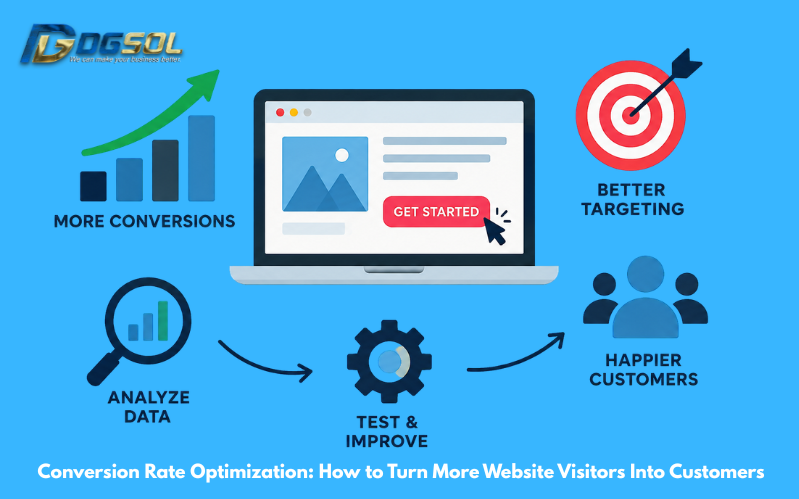
Conversion rate optimization, commonly called CRO, is the systematic process of improving a website to increase the percentage of visitors who complete a desired conversion. A conversion depends on the website’s purpose. For an ecommerce store, it may be a completed purchase. For a B2B site, it could be a lead form submission or consultation request. CRO involves analyzing user behavior, identifying barriers, testing improvements, and measuring the results.
Why Is Conversion Rate Optimization Important?
A site can receive significant traffic without generating enough leads or sales. That is why website conversion optimization is important. CRO helps businesses examine what happens after visitors arrive rather than focusing only on how many people visit.
Effective conversion optimization can help businesses:
- Generate more leads from existing traffic
- Increase online sales
- Improve the user experience
- Reduce unnecessary steps in the customer journey
- Identify problems that prevent conversions
- Make landing pages more effective
- Improve forms and checkout processes
- Make better decisions using user behavior data
How to Increase Website Conversion Rate
Improving a website conversion rate requires more than making a page look attractive. The goal is to remove unnecessary friction and make it easier for visitors to understand the offer and complete the desired action.
Here are practical conversion rate optimization strategies businesses can use.
1. Improve Your Website Value Proposition
A clear value proposition reduces confusion and helps visitors decide whether they are in the right place. Visitors should quickly understand what a business offers and why it matters. A strong value proposition should clearly communicate:
- What the business provides
- Who the product or service is for
- The main benefits
- What makes the offer useful or different
- What visitors should do next
2. Use Clear Calls to Action
A call to action (CTA) tells visitors what they should do next. Good CTA optimization focuses on clarity and relevance rather than simply adding more buttons. So, a call-to-action button should match the visitor’s intent.
Examples include:
- Request a Quote
- Book a Consultation
- Get Started
- Buy Now
- Contact Us
3. Optimize Your Landing Pages
Landing page on-page optimization is an important part of CRO because landing pages are often designed around a specific campaign, product, service, or audience. If an advertisement promises one offer but the landing page presents something completely different, visitors may leave without converting. It should generally include:
- A clear headline
- Concise supporting information
- Benefits that matter to the target audience
- Appropriate trust signals
- A visible CTA
4. Simplify Website Forms
Long or confusing forms can create unnecessary friction. Review every field and ask whether it is genuinely required for the next stage of the sales or service process. For example, a simple inquiry may only require a name, email address, phone number, and message.
Website optimization can include:
- Removing unnecessary fields
- Using clear labels
- Grouping related information
- Making required fields obvious
- Providing useful error messages
5. Improve the Website User Experience
User experience directly affects conversion because visitors need to find information and complete actions without unnecessary difficulty. Website optimization should focus on helping visitors accomplish their goals, not adding design elements for visual effect.
Focus on:
- Simple navigation
- Logical page structure
- Clear menus
- Easy-to-find contact information
- Fast and responsive interactions
6. Optimize for Mobile Conversions
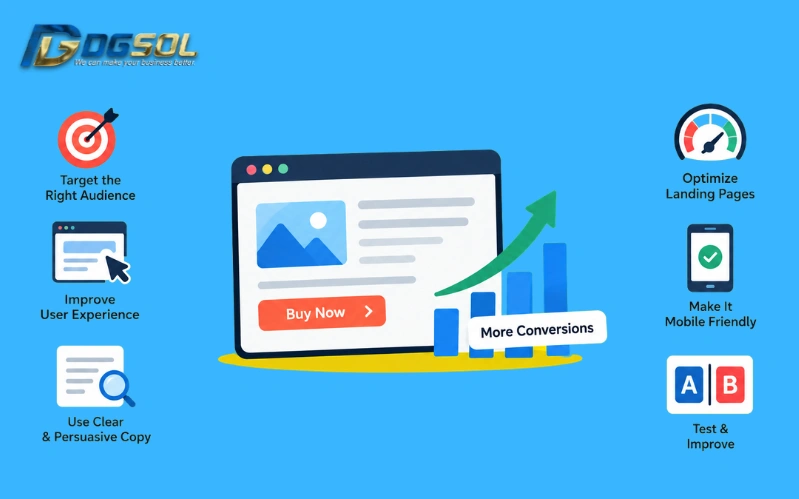
A website may look good on a desktop but still provide a poor experience on smartphones. Test conversion journeys across different screen sizes. Pay particular attention to forms, product pages, checkout screens, and CTA buttons. Mobile conversion optimization should consider:
- Responsive layouts
- Easy-to-use menus
- Readable text
- Touch-friendly buttons
- Fast-loading pages
7. Build Trust Before Conversion
Visitors may hesitate to submit information or purchase from a business they do not know. Trust elements should support the visitor’s decision without overwhelming the page. For example, a service page can use a short testimonial or case study to provide additional context before the visitor takes action. Relevant trust elements can include:
- Customer reviews
- Testimonials & case studies
- Clear contact details
- Relevant guarantees
- Privacy and policy information
8. Reduce Conversion Friction
Conversion friction refers to anything that makes it harder or less convenient for a visitor to complete a desired action. Review the complete conversion journey and identify where visitors may become confused, uncertain, or frustrated.
Common sources include:
- Too many form fields
- Complicated navigation
- Slow-loading pages
- Too many checkout steps
- Unclear product information
- Difficult payment processes
9. Use A/B Testing
A/B testing involves comparing two versions of a page or element to determine which performs better against a defined goal.
You might test:
- Different CTA wording
- Landing page structures
- Product descriptions
- Pricing presentation
- Checkout layouts
For example, a business could compare:
Version A: “Contact Us”
Version B: “Request Your Free Consultation”
The test should have a clearly defined conversion goal and enough data to support a meaningful interpretation.
10. Use Analytics and User Data
Successful conversion rate optimization should be based on evidence rather than assumptions.
Useful data sources can include:
- Conversion tracking
- Analytics reports
- Funnel reports
- User behavior data
- Customer feedback
Data does not automatically provide the solution, but website analytics can help identify where further investigation is needed.
Common Reasons Websites Get Traffic but Few Conversions
A website can receive visitors without generating enough business results. Some common causes include:
- Unclear Value Proposition
Customers cannot quickly understand what the business offers or why they should choose it.
- Weak Calls to Action
The page doesn’t clearly tell visitors what action to take.
- Poor Landing Pages
The page may contain too much information, insufficient information, or content that does not match visitor intent.
- Complicated Forms
Customers may abandon a form if it requires unnecessary information or is difficult to complete.
- Poor Mobile Experience
It may cause trouble using smartphones with navigation, forms, buttons, or checkout.
- Lack of Trust
Visitors may hesitate when they cannot find enough information about the business, product, service, or policies.
- Slow or Difficult Site Experience
Performance problems and confusing navigation can create friction before a visitor reaches the conversion point.
- Poor Conversion Journey
A visitor may understand the offer but still face unnecessary steps before completing the action.
How to Measure Conversion Rate Optimization Results
CRO needs measurable goals. The right metrics depend on the type of conversion being optimized.
- Conversion Rate
Measure the percentage of visitors who complete the desired action.
- Lead Generation
For lead-generation websites, track qualified inquiries rather than only total form submissions.
- Sales and Revenue
For ecommerce sites, monitor completed purchases and revenue alongside conversion rate.
- Cost Per Conversion
Understanding how much it costs to generate a conversion adds context when evaluating CRO performance.
- Average Order Value
Ecommerce businesses can monitor whether optimization efforts affect the average value of completed orders.
- Funnel Drop-Off
Analyze where visitors leave the conversion journey. A high drop-off rate at one stage can indicate a problem that requires further investigation.
Common Conversion Rate Optimization Mistakes
CRO can become ineffective when businesses make changes without understanding the underlying problem.
- Changing Too Many Things at Once
If multiple major elements change at once, it can be hard to tell what caused the performance change.
- Making Decisions Without Data
A design preference is not automatically evidence of better conversion performance.
- Copying Competitors
A strategy that works for another website may not work for your audience, offer, or business model.
- Focusing Only on Design
Good visual design is useful, but CRO also involves messaging, usability, trust, forms, checkout, and the overall customer journey.
- Ignoring Mobile Users
A conversion process that works on desktop may fail on smaller screens.
- Optimizing for Clicks Instead of Business Results
More clicks do not necessarily mean more qualified leads or sales. CRO should connect website actions with meaningful business outcomes.
Final Thoughts
Conversion rate optimization is about making better use of the visitors a website already attracts. Instead of relying only on increasing traffic, businesses can examine why visitors do or do not complete important actions and improve the experience accordingly.
Start with the fundamentals: make the value proposition clear, improve landing pages, strengthen CTAs, simplify forms, reduce friction, optimize mobile experiences, and build appropriate trust signals. Then use analytics, user behaviour data, and A/B testing to identify and validate further improvements.
Whether you operate an ecommerce store, B2B site, local business, or service website in Malaysia, the most effective CRO strategy should be based on your specific audience, conversion goals, and measurable data.
Frequently Asked Questions
What is a good website conversion rate?
No universal conversion rate is good for every website. Performance depends on factors such as industry, business model, traffic source, audience, conversion type, product or service price, and user intent.
How does A/B testing improve conversion rates?
A/B testing allows businesses to compare different versions of a page or element against a defined conversion goal. It provides evidence of whether a specific change improves performance, rather than relying on assumptions.
Why is my website traffic not converting?
Possible reasons include an unclear value proposition, weak CTAs, poor landing pages, complicated forms, lack of trust, slow pages, poor mobile usability, irrelevant traffic, or unnecessary steps in the conversion journey.
What is the difference between CRO and SEO?
SEO focuses primarily on improving a website’s visibility and attracting relevant organic traffic, while CRO focuses on improving what happens after visitors arrive so more of them complete valuable actions. The two can work together, but they address different stages of the user journey.
What is ecommerce conversion rate optimization?
Ecommerce conversion rate optimization focuses on improving the online shopping experience to help more visitors complete purchases. It can include product page optimization, checkout improvements, mobile shopping improvements, and reducing cart abandonment.
How does CRO help Malaysian businesses?
CRO Malaysia strategies can help businesses improve the percentage of relevant visitors who become leads or customers. The approach can include mobile optimization, localized landing pages, clearer communication, better forms, stronger trust signals, and improved conversion journeys.