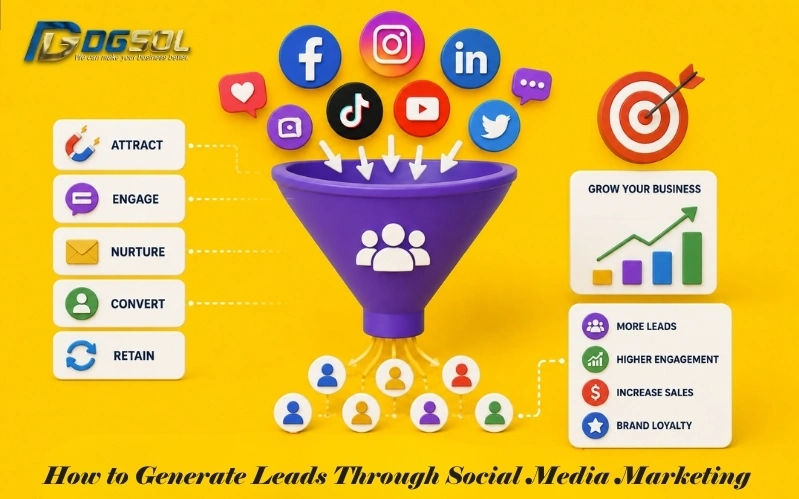
Social media has become one of the most effective digital marketing channels for businesses looking to attract potential customers, build relationships, and generate qualified leads. Today, billions of people use platforms like Facebook, Instagram, LinkedIn, TikTok, and YouTube to discover brands, research products, ask for recommendations, and make purchasing decisions. This presents businesses with an excellent opportunity to reach their target audience, increase brand awareness, drive website traffic, and generate high-quality leads without relying solely on traditional advertising. However, posting on social media isn’t enough; businesses still don’t get leads and sales. A successful social media lead generation requires a clear strategy and strong calls to action that encourage potential customers to take the next step. In this guide, you’ll learn how to generate leads through social media marketing, discover the best social media platforms for lead generation, and explore practical strategies to attract more qualified prospects and convert them into loyal customers.
What Is Social Media Lead Generation?
Social media lead generation is the process of attracting potential customers through social media platforms and encouraging them to share their contact information or express interest in your products or services. Instead of immediately trying to sell, businesses use valuable content, educational posts, videos, live sessions, and conversations to build trust. Once trust is established, users are encouraged to take actions such as:
- Filling out a contact form
- Requesting a quotation
- Booking a consultation
- Downloading a free guide or checklist
- Registering for a webinar
- Signing up for an email newsletter
- Sending a direct message
- Clicking a “Contact Us” button
Every person who shows genuine interest in your business becomes a potential lead that your sales or marketing team can nurture into a customer. Unlike traditional advertising, social media marketing allows businesses to build long-term relationships with their audience before asking them to make a purchase.
Types of Lead Generation on Social Media
Understanding different types of leads helps businesses create more effective marketing campaigns and personalized follow-up strategies.
1. Cold Leads
Cold leads are people who have never interacted with your business before. They may discover your brand through social media posts, hashtags, advertisements, or shared content but are still unfamiliar with your products or services. At this stage, your goal is to educate, create awareness, and encourage engagement rather than push for an immediate sale.
2. Warm Leads
Warm leads already know about your business. They may have:
- Visited your website
- Followed your social media pages
- Liked or commented on your posts
- Watched your videos
- Downloaded a resource
- Joined your email list
Because they are familiar with your brand, warm leads are generally more likely to convert than cold leads.
3. Marketing Qualified Leads (MQLs)
Marketing Qualified Leads (MQLs) are people who have shown strong interest in your business through marketing activities but may not yet be ready to buy.
Examples include users who:
- Download an eBook
- Register for a webinar
- Subscribe to your newsletter
- Visit multiple pages on your website
- Frequently engage with your social media content
These leads often require additional nurturing through valuable content before they are ready to speak with your sales team.
4. Sales Qualified Leads (SQLs)
Sales Qualified Leads are prospects who are ready to discuss your products or services with your sales team.
They may have:
- Requested a quotation
- Booked a consultation
- Asked about pricing
- Requested a product demonstration
- Contacted your business directly
These are typically the highest-quality leads because they have already expressed a strong buying intent.
Best Social Media Platforms for Lead Generation
Not every social media platform works the same way. Each platform attracts different audiences, supports different content formats, and helps businesses achieve different marketing goals. Choosing the right platform depends on your target audience, industry, and the type of leads you want to generate.
| Social Media Platform | Best For | Primary Audience | Best Lead Generation Goal |
| Local businesses, eCommerce, services | 25–55+ | Lead generation, inquiries, website traffic | |
| Lifestyle, fashion, beauty, food, travel | 18–44 | Brand awareness and product inquiries | |
| B2B companies and professional services | Professionals and decision-makers | High-quality business leads | |
| TikTok | Consumer brands and startups | 18–34 | Brand awareness and new customer acquisition |
| YouTube | Educational content and long-term marketing | All age groups | Evergreen traffic and qualified leads |
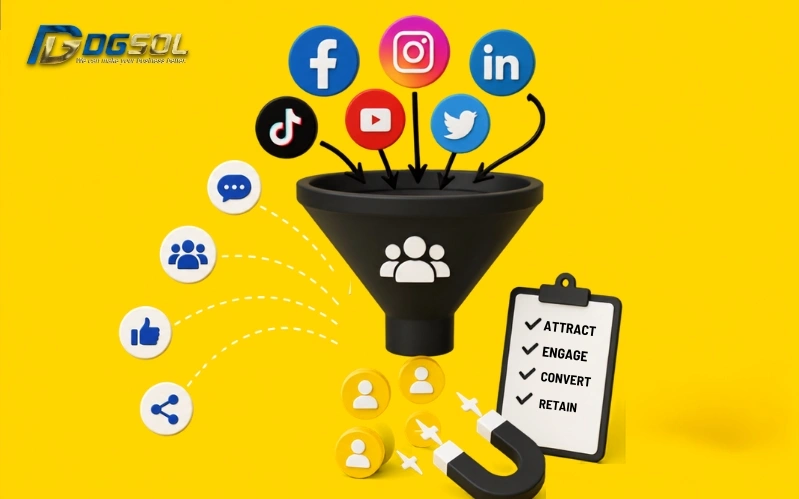
How to Generate Leads Through Social Media Marketing (Step-by-Step)
By following a structured strategy, businesses can consistently generate high-quality leads and improve their conversion rates.
1. Define Your Target Audience
Before creating content or running ads, identify exactly who you want to reach. Understanding your audience helps you create content that solves their problems and encourages them to engage with your business.
Consider factors such as:
- Age and gender
- Location
- Interests and hobbies
- Profession
- Income level
- Pain points
- Buying behaviour
The more clearly you define your audience, the easier it becomes to create relevant content that generates qualified leads.
2. Optimize Your Social Media Profiles
Your social media profile is often the first impression potential customers have of your business. An incomplete or unprofessional profile can reduce trust and cause users to leave without taking action.
Ensure your profile includes:
- A professional profile picture or logo
- A clear business description
- Relevant keywords
- Website URL
- Contact information
- Call-to-action button
- Consistent branding across platforms
An optimized profile makes it easier for visitors to understand your business and contact you.
3. Create Valuable Content
People follow brands that provide useful information rather than constant sales pitches. Focus on creating educational content that helps your audience solve problems, answer common questions, or learn something new.
Examples include:
- How-to guides
- Educational videos
- Industry tips
- Infographics
- FAQs
- Case studies
- Customer success stories
- Product demonstrations
Providing consistent value helps establish your business as a trusted authority and encourages users to return for more content.
4. Use Short-Form Video Content
Short-form videos have become one of the most engaging content formats across platforms like Facebook, Instagram, TikTok, and YouTube Shorts.
Businesses can use videos to:
- Explain products or services
- Answer common customer questions
- Share quick tips
- Showcase customer testimonials
- Demonstrate products
- Highlight behind-the-scenes activities
Short, informative videos often generate higher engagement, helping businesses reach a larger audience and attract new leads.
5. Offer Valuable Lead Magnets
A lead magnet is a free resource offered in exchange for a visitor’s contact information.
Popular lead magnets include:
- Free eBooks
- Checklists
- Templates
- Industry reports
- Free consultations
- Discount coupons
- Free website audits
- Webinars
Providing something valuable encourages users to share their details, making it easier to nurture them into future customers.
6. Include Strong Calls-to-Action (CTAs)
Every piece of content should encourage users to take a clear next step.
Examples of effective CTAs include:
- Contact us today
- Book a free consultation
- Download our free guide
- Request a quotation
- Visit our website
- Learn more
- Send us a message
- Get started now
A clear CTA increases the likelihood that visitors will become leads instead of leaving your page without taking action.
7. Use Paid Social Media Advertising
Organic content is important, but paid advertising tool allows businesses to reach a much larger and highly targeted audience.
Social media advertising enables businesses to target users based on:
- Location
- Age
- Interests
- Occupation
- Purchasing behaviour
- Website visitors
- Customer lists
Running targeted advertising campaigns can significantly improve lead generation while reducing wasted marketing spend.
8. Engage With Your Audience
Social media is designed for conversations, not one-way communication.
Businesses should actively:
- Reply to comments
- Answer direct messages
- Respond to questions
- Thank customers for feedback
- Participate in discussions
- Join relevant communities
Prompt engagement builds stronger relationships and increases customer trust.
9. Build Social Proof
People are more likely to trust businesses that have positive customer experiences.
Social proof can include:
- Customer testimonials
- Online reviews
- Case studies
- Success stories
- User-generated content
- Client logos
- Industry awards
Sharing social proof helps reduce uncertainty and encourages potential customers to contact your business.
10. Track Performance and Optimize
Successful lead generation requires continuous improvement.
Monitor key performance indicators (KPIs) such as:
- Engagement rate
- Reach
- Website traffic
- Click-through rate (CTR)
- Cost per lead (CPL)
- Conversion rate
- Lead quality
- Return on ad spend (ROAS)
Analyzing these metrics helps businesses identify what works and improve future campaigns.
Which Social Media Platform Is Best for Your Business?
The best platform depends on your business model, target audience, and marketing objectives.
Choose Facebook if you want to:
- Generate enquiries
- Drive website traffic
- Reach local customers
- Promote services
- Build online communities
Choose Instagram if you want to:
- Increase brand awareness
- Showcase products visually
- Build customer engagement
- Reach younger consumers
Choose LinkedIn if you want to:
- Generate B2B leads
- Connect with business professionals
- Build industry authority
- Reach decision-makers
Choose TikTok if you want to:
- Grow brand visibility quickly
- Reach Gen Z and Millennials
- Create engaging short-form videos
- Increase product discovery
Choose YouTube if you want to:
- Build long-term organic traffic
- Educate potential customers
- Improve SEO
- Generate evergreen leads
Many businesses achieve the best results by using multiple platforms together, such as WhatsApp blasting, messaging, or Telegram blasting for lead generation. For example, a company may use TikTok and Instagram to build awareness, Facebook to generate inquiries, LinkedIn for B2B networking, and YouTube to provide in-depth educational content that supports long-term lead generation.
Common Social Media Lead Generation Mistakes
Avoiding common mistakes can significantly improve your lead generation efforts. Some of the most frequent mistakes include:
- Posting only promotional content
- Inconsistent posting schedules
- Ignoring comments and messages
- Not understanding the target audience
- Weak or missing calls-to-action
- Using poor-quality images or videos
- Sending traffic to poorly designed landing pages
- Ignoring social media analytics
- Trying to use every platform instead of focusing on the right ones
- Giving up too quickly without testing and optimizing
Businesses that consistently review and improve their strategy are more likely to achieve long-term success.
Future Trends in Social Media Lead Generation (2026)
Social media marketing continues to evolve as platforms introduce new AI future technologies and user behaviors change. Businesses that stay ahead of these trends are more likely to attract quality leads and remain competitive. Some key trends shaping social media lead generation in 2026 include:
1. AI-Powered Content Creation
Artificial Intelligence (AI) helps businesses create personalized content, automate responses, and improve campaign performance. AI tools can also analyze customer behavior to deliver more relevant content and advertisements.
2. Short-Form Video Dominance
Short-form videos on platforms like Instagram Reels, Facebook Reels, TikTok, and YouTube Shorts continue to generate high engagement and are expected to remain one of the most effective formats for attracting new audiences.
3. Social Commerce Growth
Consumers increasingly purchase products directly through social media platforms. Features such as in-app shopping, product tagging, and live shopping events make it easier for businesses to generate leads and sales without directing users to external websites.
4. Personalized Marketing
Users expect content that matches their interests and needs. Businesses that use customer data responsibly to deliver personalized recommendations and messaging are more likely to improve engagement and conversions.
5. Marketing Automation
Automation tools help businesses nurture leads by scheduling posts, responding to inquiries, and following up with prospects more efficiently, allowing teams to focus on building customer relationships.
Final Thoughts
Social media has become one of the most powerful channels for generating high-quality leads and building long-term customer relationships. By understanding your target audience, creating valuable content, engaging consistently, and using the right mix of organic and paid strategies, businesses can attract qualified prospects and convert them into loyal customers. Success doesn’t happen overnight. The most effective social media lead generation strategies focus on providing value, building trust, and continuously optimizing campaigns based on performance data. Whether you’re a small business, an eCommerce brand, or a B2B company, a well-planned social media strategy can help increase brand awareness, drive website traffic, and support sustainable business growth.
Frequently Asked Questions
How often should businesses post on social media?
Most businesses should post consistently rather than frequently. Posting 3–5 times per week on major platforms is generally enough to maintain engagement, though the ideal frequency depends on your audience and content quality.
Can social media generate leads without paid advertising?
Yes. Businesses can generate leads organically by publishing valuable content, engaging with followers, optimizing their profiles, and building trust over time. Paid advertising can help accelerate results but is not the only option.
What type of content generates the most leads?
Educational posts, how-to guides, short-form videos, customer testimonials, case studies, webinars, and downloadable resources are among the most effective content types for generating qualified leads.
How long does it take to generate leads through social media?
The timeline varies depending on your strategy, industry, and competition. Paid campaigns may generate leads within days, while organic social media marketing typically takes several months of consistent effort to produce sustainable results.
Should businesses use organic or paid social media marketing?
A combination of both usually delivers the best results. Organic content builds trust and long-term brand awareness, while paid advertising helps businesses reach targeted audiences and generate leads more quickly.
How do I measure the success of my social media lead generation strategy?
Track key performance metrics such as website traffic, engagement rate, click-through rate (CTR), conversion rate, cost per lead (CPL), lead quality, and return on investment (ROI) to evaluate and improve your campaigns over time.