If you are trying to improve your Google rankings in 2026, traditional backlink building alone is no longer enough.
Modern SEO success depends on:
- brand visibility signals
- content engagement patterns
- topical authority strength
- content distribution footprint
- trust-based mentions
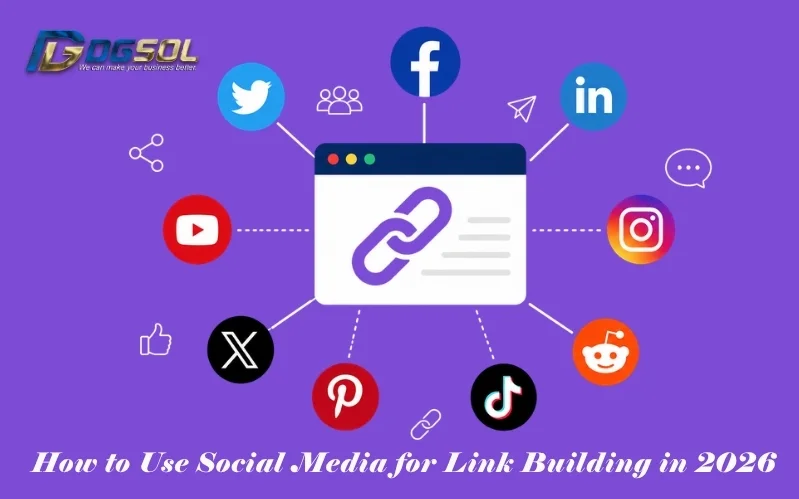
At DGSOL Marketing, we have analyzed multiple SEO campaigns and consistently found a clear pattern: Content that gains strong traction on social media platforms earns backlinks 2–5x faster than content that relies solely on outreach-based link building. This is why learning how to use social media for link building in 2026 has become a critical skill for businesses, marketers, and agencies.
Why Social Media Is Important for Link Building in Modern SEO
Social media does not directly pass site authority, but it strongly influences how backlinks strategies are discovered and earned. Below are the key ranking-impacting signals:
1. Content Discovery Signals (Faster Indexing & Visibility)
Search engines prioritize content that:
- gets shared early on social platforms
- receives consistent engagement
- appears across multiple distribution channels
This improves indexing speed and ranking momentum, especially for new pages.
2. Brand Entity Strength (Google Trust Signal)
Google evaluates websites as entities, not just pages. Social media strengthens:
- brand mentions across platforms
- search demand for your brand
- consistency of brand trust signals
A strong brand entity increases the likelihood of earning natural backlinks.
3. Link Earning Probability (Natural Backlinks)
When your content gains social traction, it becomes more visible to:
- bloggers
- journalists
- industry websites
- content creators
This leads to organic, editorial backlinks, which are the most powerful links.
4. Authority Amplification Loop (Growth Cycle)
Social media creates a compounding SEO effect:
Social Visibility → Mentions → Backlinks → Higher Rankings → More Visibility
This loop is one of the strongest modern SEO growth mechanisms.
Step-by-Step Process: How to Use Social Media for Link Building
Here is the stepwise process about the use of social media for link building as follows:
Step 1: Build Link-Worthy Content First (Foundation Layer)
Before using social media for link building, your content must be valuable enough to deserve backlinks. High-performing content types include:
- SEO case studies
- data-driven insights
- in-depth Seach engine guides
- industry breakdowns
- comparison-based content
Without high-quality content, no social media strategy can generate backlinks.
Step 2: Choose High-Impact Social Media Platforms
Not all platforms deliver equal SEO value so choose high-impact social media platforms.
1. LinkedIn (Highest Conversion for Backlinks)
LinkedIn is the strongest platform for B2B link building and SEO authority growth. Best for:
- SEO professionals
- editors and publishers
- marketers and business owners
LinkedIn content often leads to editorial backlinks and blog citations.
2. X (Twitter) – Fast Content Discovery Engine
X is ideal for rapid visibility and SEO content distribution. It helps your content reach bloggers and content curators quickly. Best for:
- SEO insights
- trending discussions
- data-based posts
3. Facebook Groups – Niche Engagement Platform
Facebook groups are useful for niche SEO visibility. Best for:
- community discussions
- local SEO promotion
- engagement-driven sharing
4. Reddit & Quora – Trust-Based Visibility Channels
These platforms support long-term SEO growth. It must be used with a value-first approach to achieve the best results. Best for:
- problem-solving content
- informational discussions
- niche authority building
5. YouTube – Authority & Trust Layer
YouTube strengthens SEO indirectly by:
- increasing brand trust
- improving content authority
- supporting multi-format distribution
Step 3: Share Content Using Context Strategy (Critical SEO Factor)
Avoid posting raw links directly. Use authentic links that improve engagement, reach, and the likelihood of earning backlinks.
Wrong approach:
“Here is my blog → [link].”
Correct approach:
- share insight first
- add opinion or data
- then include link naturally
Step 4: Build Relationship Graph for SEO Authority
Modern SEO depends heavily on trust relationships. This builds “topical trust proximity” in your industry. Do this on your site:
- engage with industry creators
- comment with value
- share relevant content
- stay consistent in niche discussions
Step 5: Use Social Listening for Link Opportunities
Social listening helps generate natural backlinks from active discussions.
Monitor:
- target keywords
- industry discussions
- competitor content mentions
Then:
- join relevant conversations
- provide insights
- share your content when it adds value
Step 6: Repurpose Content Across Multiple Platforms
One blog post can become multiple SEO assets, increasing content surface area and backlink opportunities.
- LinkedIn article
- X (Twitter) thread
- infographic post
- YouTube script
- carousel post
Common Mistakes of Link Building That Prevent High Rankings
Avoiding these mistakes is critical if you want to succeed with social media for link building in 2026 and achieve strong performance, higher Google rankings, and sustainable backlink growth.
- Link Spamming
Posting too many links without context reduces trust, lowers engagement, and can make your content appear spammy to both users and search engines.
- Using Automation Tools
Relying on bots or automated posting tools reduces authenticity, weakens engagement quality, and can harm long-term visibility across social platforms.
- Irrelevant Tagging
Tagging unrelated people, brands, or pages just for reach lowers credibility, reduces engagement, and may cause your posts to be marked as spam.
- Low-Value Content Promotion
Promoting weak or generic content fails to attract attention or backlinks, even if it is widely distributed across social media platforms.
- Buying Engagement
Purchasing likes, followers, or shares does not improve SEO performance and can damage long-term trust, credibility, and organic reach.
How DGSOL Uses Social Media for Link Building ?
At DGSOL Marketing, we follow a structured, data-driven SEO system grounded in real-world campaign experience and performance results. Our approach focuses on sustainable growth, white-hat practices rather than short-term tactics.
1. Content-First Strategy
We only promote content that provides real SEO value and is optimized for search intent. Every piece of content is designed to be informative, engaging, and capable of naturally attracting backlinks from relevant sources.
2. Platform-Specific Distribution Strategy
Each social media platform is used with a clear local SEO purpose to maximize impact and visibility:
- LinkedIn → Authority building and B2B backlink opportunities
- X (Twitter) → Fast content discovery and trending exposure
- Community platforms → Engagement, discussions, and niche visibility
3. Relationship-Driven Link Building
We focus on building genuine relationships within the industry before pursuing any backlink opportunities. By engaging with creators, publishers, and niche experts, we increase the chances of earning natural, high-quality editorial links.
4. Data Tracking System
We continuously monitor SEO performance to refine and improve our strategy, including:
- Backlinks acquired from campaigns
- Organic traffic growth trends
- Keyword ranking movement on Google
- Engagement signals across platforms
Final Thoughts
In 2026, social media is no longer just a marketing channel. It has become an important part of modern SEO and link building strategies.
When used correctly, social media helps improve:
- Google rankings
- domain authority
- indexing speed
- backlink growth
- brand trust signals
At DGSOL Marketing, we consistently see that structured social media SEO strategies outperform traditional outreach-only link-building methods.
👉 Contact us today to grow your traffic and improve your Google rankings.
Frequently Asked Questions
How do you use social media for link building in 2026?
You use social media for link building in 2026 by sharing high-value content on platforms like LinkedIn, X (Twitter), Reddit, and Facebook to increase visibility, attract engagement. Social media does not directly pass SEO authority, but it helps content get discovered faster and increases the chances of earning organic backlinks.
Does social media help SEO and backlinks?
Yes, social media helps SEO indirectly by improving content visibility, brand awareness, and engagement signals. While social media links are usually nofollow, they increase the likelihood of earning high-quality backlinks from third-party websites, which directly improves Google rankings and domain authority.
Which social media platform is best for link building?
LinkedIn is the most effective platform for link building in 2026, especially for B2B websites. X (Twitter) is also powerful for fast content discovery, while Reddit and Quora help with niche authority and long-term traffic. The best platform depends on your audience and content type.
Can you get backlinks directly from social media?
Most social media backlinks are nofollow, meaning they do not pass direct SEO authority. However, they still play a crucial role in SEO by increasing content exposure, which leads to natural backlinks from blogs, news sites, and industry publications.
How does social media improve Google rankings?
Social media improves Google rankings indirectly by increasing content visibility, brand mentions, engagement signals, and the probability of earning editorial backlinks. These combined signals help search engines understand that your content is valuable and trustworthy.
Is social media important for SEO in 2026?
Yes, social media is very important for SEO in 2026 because it supports content distribution, improves brand authority, and increases the chances of earning natural backlinks. It is now considered a key part of modern off-page SEO strategy.
How long does it take to see backlinks from social media?
Backlinks from social media are not guaranteed immediately. However, content that performs well can start attracting mentions and backlinks within days or weeks, depending on engagement, niche relevance, and content quality.