Many businesses in Malaysia invest in websites, content, and digital marketing, but still struggle to rank on Google. The reason is often hidden technical problems, weak on-page optimization, poor website structure, or outdated practices. This is where a website SEO audit comes in, helping you identify the issues preventing your site from ranking higher in search engines. It shows what needs improvement, what is hurting your visibility, and how to optimize your website for better Google rankings, traffic, and conversions.cWhether you run a local business, an eCommerce store, a corporate website, or a startup, this complete DGSOL guide will help you understand how to analyze and improve your website’s performance in Malaysia.
What is an SEO Audit?
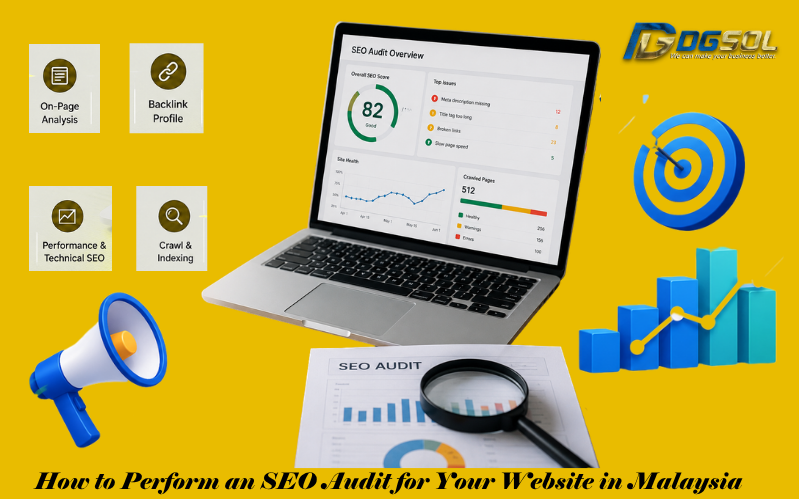
An SEO audit is a complete analysis of your website’s search engine performance. It checks technical and on-page SEO, website speed, mobile usability, content quality, backlinks, indexing issues, and user experience. This strategy’s main goal is to identify problems that stop search engines like Google from properly crawling, indexing, and ranking your website. A professional search engine optimization audit helps businesses:
- Improve Google rankings
- Increase organic traffic growth
- Fix technical optimzation errors
- Enhance website speed
- Improve user experience
- Generate more leads and sales
- Strengthen domain authority
Without regular SEO health checks, websites slowly lose visibility due to algorithm updates, outdated approaches, and increasing competition.
Why SEO Audits Are Important for Malaysian Businesses?
Competition in Malaysia’s digital market is growing rapidly. Businesses across Kuala Lumpur, Penang, Johor Bahru, and Selangor are investing heavily in SEO services to appear on Google’s first page. If your website is not optimized correctly, competitors can easily outrank you. Even high-quality content may fail if technical issues exist in the background. A website analysis helps your business:
- Understand why rankings dropped
- Discover keyword opportunities
- Fix crawl errors and indexing issues
- Improve local SEO audit performance
- Optimize Core Web Vitals
- Increase website conversions
- Improve mobile audit results

Step-by-Step SEO Audit Checklist
A successful search engine website audit checklist involves several important steps.
1. Check Website Crawlability and Indexing
Search engines must crawl and index your pages before they can rank. Fixing crawlability issues helps Google better understand your website’s structure.
Start by checking:
- Robots.txt file
- XML sitemap
- Indexed pages in Google
- crawl errors
- broken links
- Redirect issues
Use tools like:
- Google Search Console
- Screaming Frog Spider
- Ahrefs
- SEMrush
2. Analyze Website Speed and Core Web Vitals
Website speed is one of Google’s most important ranking factors. Slow websites increase bounce rates and reduce conversions.
Google evaluates websites using Core Web Vitals metrics:
- Largest Contentful Paint (LCP)
- Interaction to Next Paint (INP)
- Cumulative Layout Shift (CLS)
Common page speed optimization problems include:
- Large image files
- Unoptimized code
- Slow hosting
- Excessive plugins
Improving website performance enhances both rankings and user experience.
3. Review Mobile SEO Performance
Most users browse websites through mobile devices. Google also uses mobile-first indexing, meaning mobile usability directly affects rankings. A poor mobile experience can significantly reduce traffic and conversions. Check:
- Mobile responsiveness
- Font readability
- Touch-friendly navigation
- Mobile page speed
4. Audit On-Page SEO Elements
On-page SEO audit helps search engines understand your content and keywords. Each page should target relevant keywords naturally without keyword stuffing. Review:
- Title tags
- meta tags optimization
- Header tags (H1, H2, H3)
- internal linking
- URL structure
- Image alt text
- Keyword placement
5. Check Content Quality and SEO Optimization
Content plays a major role in rankings.Google prioritizes helpful content over low-quality keyword-heavy pages. During your website audit, analyze:
- Thin content
- Duplicate content
- Outdated pages
- Keyword relevance
- Search intent alignment
High-performing SEO content should:
- Answer user questions
- Include relevant keywords naturally
- Provide useful information
- Use proper headings
6. Analyze Internal Linking Structure
A strong internal linking structure:
- Improves crawlability
- Passes authority between pages
- Enhances navigation
- Supports better search rankings
Common issues:
- broken links
- Weak anchor text
- Poor navigation hierarchy
7. Perform a Backlink Audit
Backlinks remain one of the strongest SEO ranking factors. High-quality backlinks improve domain authority and ranking potential. Analyze:
- Total backlinks
- Referring domains
- Toxic links
- Anchor text distribution
8. Review Technical Issues
Technical SEO services form the foundation of website performance. Technical problems often silently damage rankings even if the content is excellent. Important checks include:
- HTTPS security
- Canonical tags
- Structured data
- Duplicate pages
- Redirect chains
- Server errors
9. Optimize Local SEO for Businesses
If your business targets local customers in Malaysia, the local SEO strategies is essential. It helps businesses improve website visibility in Google Maps and local search results.Check:
- Google Business Profile optimization
- NAP consistency
- Local citations
- Location-based keywords
- Customer reviews
Best SEO Audit Tools for Website Analysis
Professional SEO audit tools help businesses identify website issues accurately and improve overall site performance. These tools analyze technical SEO, keyword rankings, website speed, backlinks, and user interest to help websites perform better in search engines.
Some of the most popular SEO audit tools include:
- Google Search Console – Helps monitor indexing issues, keyword performance, crawl errors, and website visibility on Google.
- Google Analytics 4 – Tracks user behavior, traffic sources, engagement, and conversion performance.
- Screaming Frog Spider – Performs deep technical audits by scanning websites for broken links, redirects, duplicate content, and metadata issues.
- Ahrefs – Provides backlink analysis, competitor research, keyword tracking, and domain authority insights.
- SEMrush – Offers complete SEO analysis, keyword research, site audits, and competitor monitoring tools.
- GTmetrix – Analyzes website speed, Core Web Vitals, and overall page performance.
Common SEO Mistakes That Hurt Rankings
Many websites fail to rank on Google because of common but avoidable SEO mistakes. These issues can negatively affect website visibility, user experience, and overall search performance. Some of the most common optimization problems include slow loading speed, keyword stuffing, duplicate content, poor mobile usability, broken links, weak content quality, missing metadata, poor internal linking, and ignoring technical issues.
For example, a slow website increases bounce rates, while duplicate or low-quality content confuses search engines and reduces ranking potential. Similarly, missing title tags and meta descriptions make it harder for Google to understand your pages. Fixing these SEO issues improves crawlability, enhances user experience, and helps websites achieve better search engine rankings and higher organic traffic.
Final Thoughts
A professional SEO audit Malaysia strategy is one of the most important steps in improving website visibility and Google rankings. It helps businesses identify technical problems, optimize content, improve user experience, and strengthen overall SEO. Without regular website analysis, websites can slowly lose rankings, traffic, and potential customers. DGSOL Malaysia helps you, whether you manage a local business, an eCommerce store, or a corporate website. Performing regular website audit services ensures your site stays optimized, competitive, and aligned with Google’s latest standards.
Frequently Asked Questions
How often should I perform a website SEO audit?
Most businesses should perform a website SEO audit every 3 to 6 months. Regular site audits help identify technical issues, track keyword rankings, improve website performance, and maintain strong search engine visibility.
Can I perform an SEO audit myself?
Yes, you can perform a basic SEO audit using free tools such as Google Search Console and Google PageSpeed Insights. However, professional SEO services provide deeper technical analysis, competitor insights, and advanced optimization recommendations.
What are the most common optimzation issues found during an audit?
Common SEO problems include slow website speed, broken links, duplicate content, poor mobile usability, missing metadata, crawl errors, weak internal linking, and technical issues that negatively affect Google rankings.
How does technical SEO improve search engine rankings?
Technical SEO improves crawlability, indexing, website speed, mobile performance, and site structure. Fixing technical issues helps search engines understand your website better, which can improve search rankings and organic traffic growth.
Why is website speed important for search ranking?
Website speed is a major Google ranking factor. Faster websites improve user experience, reduce bounce rates, and increase conversions. Slow-loading websites often struggle to rank well in search engine results.
How long does it take to see results after an SEO audit?
SEO results vary depending on competition, website condition, and optimization level. Businesses may start seeing improvements in rankings and traffic within a few weeks to several months after implementing the given recommendations.
Do small businesses in Malaysia need SEO audits?
Yes. We help small businesses in Malaysia identify website issues, improve local SEO visibility, attract targeted customers, and compete more effectively in Google search results.
How does local SEO help businesses in Malaysia?
Local SEO helps businesses rank in Google Maps and location-based searches. It improves online visibility for searches related to Kuala Lumpur, Penang, Johor Bahru, Selangor, and other local Malaysian markets.