If you are asking which digital marketing strategies actually help to grow a business, you are already ahead of many competitors still guessing. In 2026, attention is expensive, algorithms change weekly, and buyers research everything online before they contact you. You cannot afford random tactics. This DGSOL Marketing article explains what digital marketing is, how it grows a business at each stage of the buyer journey, the most effective strategies to focus on, and how an agency like DGSOL Malaysia can support business owners with limited time or in‑house skills.
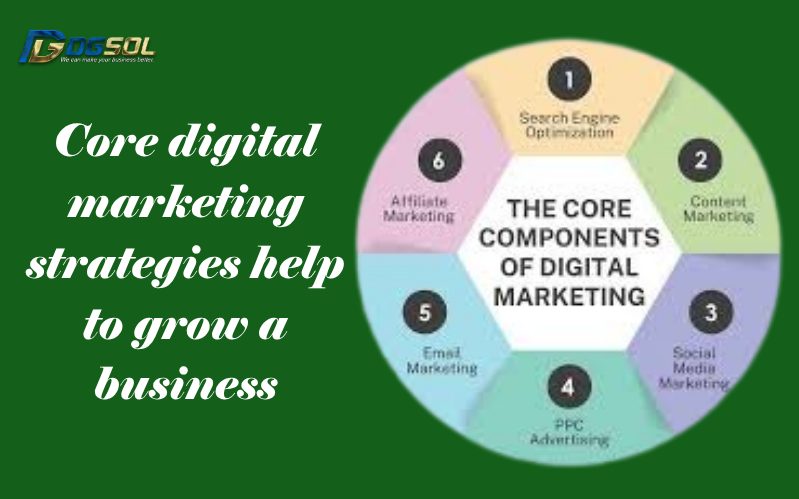
Quick Answer: The digital marketing strategies that most reliably grow a business are: clear positioning and website optimization, SEO and content marketing, targeted paid ads, email and marketing automation, and consistent social media plus remarketing—all tracked with analytics and adjusted based on data.
What is digital marketing?
Digital marketing is the use of online channels—search engines, social media, email, websites, and paid ads—to attract, engage, and convert customers. Unlike traditional marketing, every click, view, and conversion can be measured in real time.
In practice, digital marketing combines several disciplines:
- Owned media: your website, blog, email list, and content.
- Earned media: organic search visibility (SEO), social shares, reviews, and PR.
- Paid media: Google Ads, Meta Ads (Facebook/Instagram), LinkedIn Ads, and display.
The best digital marketing strategies for business growth blend these elements into a single, measurable system rather than isolated campaigns.
Core digital marketing strategies that grow a business
1. High-converting website and on-page SEO
Your website is your primary sales asset. In my experience auditing hundreds of sites, most businesses lose leads not because of traffic, but because their site is slow, confusing, or not optimized for conversions.
Focus on:
- Clear positioning above the fold: one sentence explaining who you serve, what you do, and the outcome.
- Fast load speed: aim for sub‑2 seconds; site speed is a ranking and conversion factor. [SOURCE: Google Web.dev – Core Web Vitals guidance]
- On-page SEO: descriptive titles, headings, internal links, and helpful content targeting real queries.
- Conversion elements: contact forms, quote requests, lead magnets, and clear calls to action.
2. SEO and content marketing for compounding growth
Organic search remains one of the best strategies for growing a business because it attracts high‑intent visitors actively seeking solutions.
Practical steps:
- Research questions your buyers ask (use Google “People also ask”, Reddit, and customer emails).
- Create in‑depth guides, how‑tos, and comparison pages that genuinely answer those questions.
- Publish consistently and update high‑performing content every 6–12 months for freshness.
- Use internal linking to connect related articles and pillar pages.
3. Paid advertising for fast, targeted traffic
While SEO compounds over time, paid ads deliver immediate visibility. The key is precision, not just spend.
High‑impact options:
- Google Search Ads: capture ready‑to‑buy intent with keywords like “near me”, “pricing”, “best”, and “review”.
- Meta (Facebook/Instagram) Ads: excellent for visual products, local businesses, and retargeting site visitors.
- LinkedIn Ads: ideal for B2B lead generation with job‑title and company‑size targeting.
Always send ad traffic to dedicated landing pages, not your generic homepage, and track conversions with Google Analytics 4 or a similar tool.
4. Email marketing and marketing automation
Email remains one of the highest‑ROI digital channels. Industry data show that email generates $30–$40+ in revenue for every $1 spent in many niches.
Use email to:
- Nurture new leads with welcome sequences and educational content.
- Recover abandoned carts or incomplete inquiries with gentle reminders.
- Upsell, cross‑sell, and bring back past customers with segmented campaigns.
Even a simple sequence of three to five emails, triggered after a form submission, can significantly improve conversion without more ad spend.
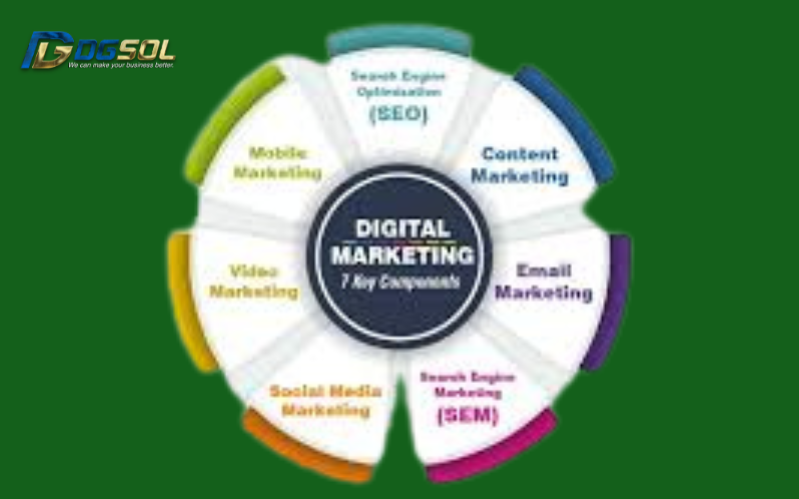
How does digital marketing help to grow a business?
Digital marketing strategies grow your business by improving each stage of the buyer journey: awareness, consideration, and decision.
- Awareness: SEO, social media, and video content help potential buyers discover you when they research solutions to their problems.
- Consideration: in‑depth blog posts, case studies, webinars, and comparison pages build trust and authority.
- Decision: remarketing ads, email follow‑ups, testimonials, and optimized landing pages push prospects to contact or buy.
Because every interaction is trackable, you can see exactly which touchpoints generate leads and revenue, then invest more in what works and cut what does not. That data‑driven refinement is what makes digital channels so powerful compared with offline campaigns.
How does DGSOL Malaysia help business owners grow?
DGSOL Malaysia focuses on local SEO, turning your scattered online efforts into a coherent growth system for local and regional businesses.
Typically, DGSOL Malaysia supports business owners by:
- SEO Services – Boost your website rankings with keyword research, on-page & technical SEO, local SEO, content optimization, and link building.
- Social Media Marketing – Grow your presence on Facebook, Instagram, TikTok, and LinkedIn with strategic campaigns and engaging content.
- Content Writing & Graphic Design – Create SEO-friendly website copy, blogs, landing pages, and visually appealing graphics that convert.
- Google Ads & PPC Management – Run high-converting ad campaigns, optimize landing pages, manage bids, and track ROI effectively.
- Website Design & Development – Build responsive, fast, and secure websites with excellent user experience and mobile-friendly design.
- WhatsApp, SMS & Telegram Marketing – Reach customers instantly with targeted messaging for promotions, reminders, events, and engagement.
For time‑poor founders, this type of partnership compresses the learning curve and avoids the expensive trial‑and‑error phase many businesses go through on their own.
Expert insights and common mistakes to avoid
After testing digital marketing strategies across different industries, several patterns repeat.
Common mistakes
- Chasing every new platform instead of mastering one or two core channels.
- Running ads without tracking leads and sales, then assuming “ads don’t work”.
- Publishing content aimed only at rankings, not at genuinely helping readers.
- Ignoring mobile users when more than half of the traffic is mobile in most markets.
Expert tips
- Start with one clear offer and one primary funnel (for example: Google Ads → landing page → email follow‑up) before expanding.
- Talk to customers and sales teams monthly; their language is your best copy source.
- Review analytics every 30 days and kill the bottom 20% of campaigns while reinvesting into the top 20%.
Channel comparison: quick wins vs long-term assets
| Feature | Paid Ads | SEO & Content | Recommendation |
| Speed of results | Fast (days) | Slow‑medium (months) | Use paid ads for testing offers and short‑term leads. |
| Cost over time | Increases with scale | Decreases per lead as content ranks | Invest in SEO as a compounding asset |
| Trust & authority | Moderate | High when content is strong | Use content to educate and build authority. |
| Best use case | Promotions, new offers, retargeting | Evergreen education and lead generation | Combine both for stability and growth. |
Final Thoughts
Effective digital marketing strategies focus on creating a fast, trustworthy website, attracting qualified visitors through SEO and paid ads, and converting them with compelling offers and email nurturing. Growth comes from aligning these channels with your customer journey and continuously improving them with data.
- Treat your website as your main sales engine.
- Use SEO and content for long‑term, compounding traffic.
- Layer paid ads and remarketing for quick, targeted wins.
- Automate email to convert and retain more customers.
Next, audit your current online presence, choose one primary funnel to optimize first, and consider where expert support, whether internal or via partners like DGSOL Malaysia, can accelerate your results.
Frequently Asked Questions
What are the best strategies to grow a business with digital marketing?
The most effective mix usually includes a fast, conversion‑focused website, search engine optimization with high‑quality content, targeted Google and social ads, and email marketing automation. Together, these channels attract traffic, nurture leads, and convert them into paying customers in a measurable way.
How quickly can digital marketing grow my business?
Paid ads can bring leads within days if your offer and landing page are strong. SEO and content typically take three to six months to show consistent results.
How does digital marketing help small businesses compete with larger brands?
A small business can outrank larger brands for specific local or long‑tail keywords, build strong relationships via email and social media, and use remarketing to stay visible to interested prospects without a massive budget.
Do I need to be on every social media platform?
No. Being active and strategic on one or two platforms where your audience actually spends time is far better than being weak everywhere.
Can I manage digital marketing myself, or do I need an agency?
You can start with basic SEO, simple campaigns, and content if you have time to learn. As complexity grows, or if you need faster results, partnering with a specialist agency such as DGSOL Malaysia can help you avoid costly mistakes and scale more efficiently.